Hamstring Workouts at Home: Complete Guide for Strength and Performance
Powerful hamstring muscles are necessary to support lower body strength, athletics and daily movement. These muscles assist you to walk, run, jump, climb stairs and push things up safely. Regrettably, most individuals pay a lot of attention to the muscles on the front of their legs, but do not pay much attention to the muscles on the back of their legs. This unequal is capable of diminishing performance and leading to injury risks in the long term.
Home hamstring exercises can aid in correcting these problems and enhance strength and stability. The positive aspect is that, the training of hamstrings does not need a costly gym membership and difficult apparatus. A large number of exercises do not involve any equipment or a lot of space. Regular hamstring training can provide visible results whether you want to build more powerful legs, increase your performance in sports or prevent injuries. With a regulated exercise program, and by paying attention to correct form, you can get the hamstrings stronger and enhance lower-body fitness at the comfort of your living-room.
Understanding the Hamstring Muscles
What Are the Hamstrings?
The hamstrings are a trio of muscles that are found on the posterior part of the thigh. The muscles act in unison to flex the knee and straighten the hip when moving. They contribute significantly to running, walking, jumping as well as balance. Strong hamstrings are a necessity in the overall physical performance and movement as they assist in supporting most of the daily movements.
Why Strong Hamstrings Matter
Power, speed and stability during movement are created with strong hamstrings. They are used in conjunction with the glutes and quadriceps to facilitate effective lower-body mechanics. Also, good hamstring muscles enhance posture and prevent the strain on knees and the back. Consequently, people tend to have improved sport performance and reduce movement related issues.
Common Causes of Weak Hamstrings
The daily sitting experience of many people takes several hours and may decrease the hamstring activation and strength. Moreover, exercise routines tend to focus on exercises that work the front muscles and ignore the back muscles. This can result in weakness, lack of mobility, and increased risk of injury. Fortunately, specific training might be used to regain strength and enhance the quality of movement in general.
Benefits of Hamstring Workouts at Home
Increased Lower-Body Strength
Among the greatest advantages of hamstring exercises at home, one can single out the enhanced lower-body strength. Examples of movements that involve the hamstrings are lifting, sprinting, squatting, and jumping. Tougher hamstrings assist in enhancement of the power output with enhanced mobility efficiency. They are also known to promote even muscle growth along the leg, simplifying daily tasks and reducing their risk of injury.
Better Athletic Performance
Athletes also rely on powerful hamstrings to gain speed, agility and explosive power. These are the muscles that produce the strength when sprinting, jumping, and changing direction swiftly. Hamstring strength is also a benefit of a good hamstring, which enhances the running performance and impact absorption during the high intensity exercise. As a result, a lot of athletes have exercises that train the hamstring as part of their training program.
Improved Balance and Stability
The hamstrings aid in stabilizing the hips, knees and pelvis during movement. Tighter hamstrings enhance balance and coordination and lessen the joint stress. Stability is also better, which facilitates the process of safer movement in exercise and daily activities. Consequently, people tend to feel more confident and have a better overall performance.
Reduced Injury Risk
The hamstring muscles are often weak, and they are associated with muscle imbalances and dysfunction of the movement. Such problems can cause stress on the knees, hips, and lower back. Training hamstrings makes them stronger to support the joint and improve the quality of the movement with a decreased risk of injury. Hamstring training is therefore significant in physical health in the long run.
Best Hamstring Workouts at Home Without Equipment
Glute Bridges
The glute bridges are some of the most effective bodyweight exercises to tighten the hamstring and the glutes. To do this exercise, lie on your back with your knees bent and feet flat on the floor. Use your heels and push up the hips till your body is straight. Wait a moment and then bring yourself down. This is a basic motion that enhances strength, stability and hip activity.
Single-Leg Glute Bridges
Single-leg glute bridges are even more difficult since most of the work is done by one leg. This difference can be used to enhance balance, coordination, and unilateral strength. It also determines the differences in strength on one side of the body to the other. This exercise can be done regularly to have stronger and more balanced hamstrings.
Hamstring Walkouts
Hamstring walkouts place tension on the posterior chain at all times. Start in a bridge and gradually move your feet out of your body. Stretch your legs as much as you can with your hips up. Then back to the original position. This would be a good workout to tighten the hamstrings without the use of equipment.
Reverse Lunges
Reverse lunges work on hamstrings, glutes, and quadriceps. Lunge backwards with your torso straight. To get back to the initial position, push with your heel in the front. This exercise enhances the strength of the lower body, improves balance and coordination.
Best Hamstring Workouts at Home With Equipment
Dumbbell Romanian Deadlifts
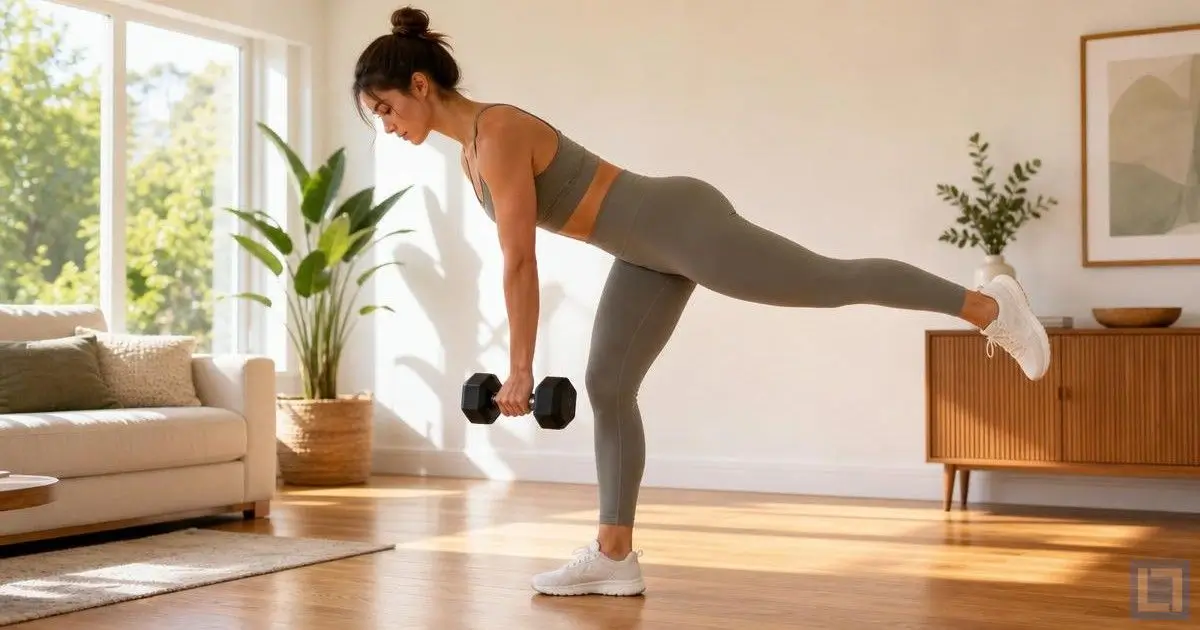
Among the best hamstring exercises is the Romanian deadlifts. Grasp dumbbells in front of the body, and hinge at the hips without bending the back. Reduce the weights until you begin to stretch in the hamstring, and then go back to the starting position. This workout builds strength, flexibility, and posterior chain strength.
Hamstring Curls with Resistance Bands.
Resistance bands are a cheap and easy method of strengthening the hamstrings at the house. Fasten the band and do some controlled curling motions by dragging your heels to your buttock. The unchanging tension aids in enhancing endurance and strength of the muscles.
Kettlebell Swings
Kettlebell swings are a combination of strength training and conditioning. The potent hip-hinge movement is a heavy load on the hamstrings and glutes. Also, kettlebell swings enhance cardiovascular fitness and athletic performance. They are a great alternative to those who want to engage in effective exercise of the whole body.
Beginner Hamstring Workout Routine
Novices are advised to work on correct patterns of movements and then build up the intensity of work. Begin with an active warm-up, which will consist of leg swings, walking lunges, and squats with body weight. This workout enhances blood circulation and mobility pre-training.
Warm up and do three rounds of glute bridges, reverse lunges, and hamstring walkouts. Take a one-minute break between sets and concentrate on controlled movement during each exercise. The initial stages of training are more about consistency than intensity. Regular exercise of these exercises helps beginners establish a solid foundation in future development, as well as, enhance strength, stability and general fitness of the lower body.
Intermediate and Advanced Hamstring Workout Routine
After getting a good base, then you can add more training and more workout intensity. Advanced training is used to develop more strength, endurance and muscle growth besides enhancing athletic performance. Also, progressive overload helps to keep your muscles on their toes, and it is what helps avoid training plateaus.
The basic intermediate workout may consist of Romanian deadlifts, single-leg glute bridges, swings of a kettlebell, and hamstring walkouts. Do three or four sets of all exercises and pay attention to the controlled movement or correct form. Resistance, repetitions, or training volume should be progressively increased as your strength increases. Regular progression will maximize the outcomes and contributes to the growth of muscles in the long run.
Weekly Hamstring Training Schedule
A workout regime will enhance the regularity and rest. In the majority of cases, people can get great results training their hamstrings twice or thrice in a week. This frequency is sufficient to stimulate growth but gives time to rest between sessions.
An intermediate plan could consist of hamstring exercises on Monday and Thursday. The intermediate trainees may include an extra session on a Saturday to increase volume. During non-training days, concentrate on mobility exercises, stretching, or some light cardiovascular exercises. An adequate schedule contributes to avoiding overtraining and enhances performance in the course of the week.
Significance of Pre-Training Warm-Ups.
Some individuals do not attach the significance of warming up prior to exercise. Nonetheless, good warm-ups will prepare the muscles and joints to engage in physical activities and minimize the risk of injuries. They augment the circulation too, and raise the efficiency of movement.
Prior to doing hamstring exercises at home, take five to ten minutes to do dynamic movements. Our favorites include leg swings, walking lunges, bodyweight squats, and light jogging. These workouts engage the lower body and enhance movement prior to more challenging exercises. An effective warm-up can also result in an improved performance in the actual workout.
Recovery and Stretching for Hamstring Health
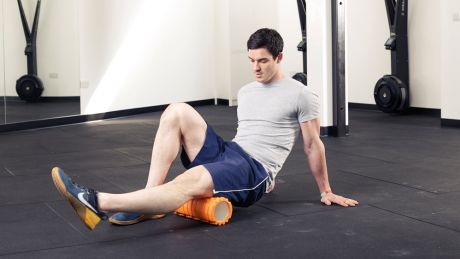
Training should be accompanied by recovery that is equally important in making a stronger hamstring. Muscles recover in between training sessions and adjust to stress of the past training. In the absence of proper rest, the growth is slowed and the injury is more likely to occur.
Flexibility can be maintained by stretching and enhancing the quality of movement. Standing hamstring stretches, seated toe touches, and dynamic leg swings are simple stretches that work. Moreover, hydration, as well as sufficient protein intake aids in muscle recovery. Regular recovery practices can ensure that the gains of hamstring exercises at home are maximized and physical health in the long-term is maintained.
Common Hamstring Training Mistakes
Skipping Proper Warm-Ups
Not preparing the body before starting exercises is one of the biggest mistakes. Muscles that are cold lack elasticity and are prone to strains. Warm-up is thus something you should ensure you do during your training.
Using Poor Technique
The technique of exercising is of paramount importance in safety and effectiveness. Most people are in a hurry when it comes to movements or they overuse the weight without learning to do it right. This practice tends to put injured individuals at a higher risk and restrict outcomes. Concentrating on controlled movement gives more results with time.
Ignoring Recovery
There are people who think that the more they train the better the results. However, as it is unfortunate, lack of proper recovery may result in fatigue, soreness, and reduced performance. The rest days give time to muscles to rest and develop. Recovery must therefore be a part of any fitness program.
Neglecting Progressive Overload
Training modifies muscles. Workouts cannot be made more difficult and then the progress will eventually slow down. The repetitions, resistance, or difficulty of the workout should be gradually increased to ensure consistency in improvement. This is the main principle of further strength and muscle growth.
Hamstring Development tips.
To develop more powerful hamstrings, a mix of intelligent exercise and proper habits is necessary. Regularity is the greatest aspect since the long-term outcomes are achieved through regular workouts and not the occasional vigorous workouts.
Remember that it is important to master the perfect form of exercises first and then increase intensity. Also, add hip-hinge and knee-flexion to your routine. Romanian deadlifts and hamstring curls are exercises that work on the muscles in different poses to produce a more holistic development.
Eating is also a significant factor in muscle development and repair. Sufficient protein intake aids in muscle recuperation after exercises. Moreover, good sleep contributes to maximized recovery and performance. These habits coupled with frequent hamstring exercises at home can help speed up this process.
Hamstring Exercises.
Hamstrings are usually stressed by the athletes more than by an ordinary person. Soccer, football, basketball, tennis and track are the sports that demand speed, power and sudden directional changes. Thus, good hamstrings are the key to perfect performance.
Exercises that build up strength and explosiveness should be included in athletes. Romanian deadlifts, kettlebell swings, single-leg bridges, and Nordic hamstring curls are great options. The exercises enhance the production of forces and minimize the occurrence of frequent sports-related injuries. This has led to improved performance and longer life cycle of the athletes during their seasons.
Hamstring Workouts for Everyday Fitness
Although you are not an athlete, hamstring strength is still of importance. Good hamstrings enhance posture, balance and functional movement in everyday activities. They also keep the joints healthy and decrease physical load in the process of performing routine activities.
When hamstrings are strengthened on a regular basis, many individuals report improved walking, stair climbing, and lifting. Moreover, lower-body weight training can provide increased overall fitness and mobility. This renders the hamstring exercises at home worthwhile to everyone of all ages and activity levels.
FAQs
Is it possible to develop a hamstring without gym equipment?
Yes. Numerous good body weight exercises are hamstring strengthening exercises without equipment. Exercises like glute bridges, hamstring walkouts, reverse lunges and Nordic curls can yield great outcomes when they are done regularly.
What is the frequency of training my hamstrings?
The majority of the population is fortunate to train hamstring on two or three occasions every week. This is a schedule that gives enough stimulus to develop and gives enough rest between sessions.
Do hamstring exercises using bodyweight work?
Bodyweight exercises may be extremely effective, especially those who are beginners and intermediate trainees. Regular development and appropriate technique enable maximization of results.
What is the best hamstring exercise?
Romanian deadlifts are regarded as one of the most effective hamstring exercises as they utilize several muscles of the posterior-chain at the same time. Nonetheless, a combination of exercises typically yields the most desirable net effects.
Will hamstring strength prevent injuries?
Yes. Powerful hamstrings enhance stability of the joints and minimize muscle imbalances. As a result, they contribute to reducing the risk of strains, knee problems, and other typical injuries.
Conclusion
Well-developed hamstrings contribute to enhanced mobility, athletic ability, and overall fitness. They are also relevant in running, jumping, lifting, and most of the activities in day-to-day life. Thus, it is possible to use the long term benefits of both fitness and injury prevention by investing time on regular hamstring training.
The positive thing is that good hamstring exercises at home need a minimal amount of equipment and can be implemented into nearly any program. With the help of bodyweight exercises, gradual overload, adequate rest, and constant effort, you will be able to create stronger and more vigorous muscles over a certain period.
Home hamstring exercises are a good alternative to enhance the power and performance of the lower body as well as any other athlete or fitness enthusiast, irrespective of their level. Begin with simple tasks, work on the correct technique and stick to your training. In the long run, the outcomes will explain why the home hamstring exercises are one of the most worthy additions to any exercise program.