
How to Start Strength Training as a Beginner
If you’re not accustomed to strength training or gym activities, it can be a daunting prospect to embark on a strength training program. You might be asking yourself what activities to do, how much weight you should use and how many days you should train. The positive part is that you don’t have to have a costly gym account or a tough programme to get started.
Consistency and simplicity in the approach to developing strength, improving movement and developing confidence over time. This strength training for beginners guide details which exercises to select, how to plan your week and how to move forward safely, including a practical exercise to do at home or gym.
What Is Strength Training?
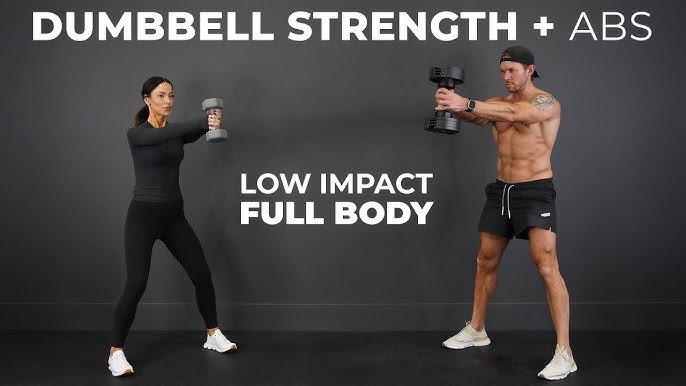
Strength training activities involve using resistance to make muscles work. This can be done with dumbbells, barbells, resistance bands, weight machines or your own body weight. Squats, rows and biceps curls, push-ups and lunges are common exercises. These exercises can target various muscles and can be modified based on fitness level.
The NHS guide to improving strength and flexibility describes the advantages of enhancing activities. The U.S. Centers for Disease Control and Prevention (CDC) suggest muscle-strengthening exercises that work all of the major muscle groups two or more days a week. When starting out it is important to learn proper technique, select an appropriate resistance and create a workout that will be sustainable not the heaviest you can do.
Benefits of Strength Training for Beginners
A consistent beginner strength training the beauty of routine is that it can help with a variety of fitness objectives:
- Increase muscle strength: Carrying groceries and going up and down stairs might be easier.
- Promote bone health: Resistance exercise strengthens bones.
- Enhance the function of your body: Legs, back, chest, shoulders and core are trained to develop balanced strength.
- Support body composition goals: Strength training can help to maintain or build muscle and diet and activity will affect body fat.
- Gaining confidence: Progress will be more apparent when it comes to repetitions, technique, and resistance.
There is no set formula for results; depending on training history, nutrition, recovery and consistency. It is not necessary to train every day to gain advantage.
How to Start Strength Training: Five Essential Steps
1. Set a realistic goal
Set goals for yourself. The purpose of your training may be to increase general fitness, strength or muscle mass, or make activities more convenient. Pick one big target to pursue during your initial 8 weeks. 2 sessions of whole body exercises per week, and slowly adjust to the technique in 6 main exercises.
2. Choose your training environment
It can be done at home or in a gym. Select the solution that works best for your budget, equipment and schedule
| Home training | Gym training |
| Body-weight exercises and resistance bands | Dumbbells, barbells and weight machines |
| Lower cost and no travel time | More equipment and resistance options |
| Convenient for short sessions | Access to trainers or equipment guidance |
| Requires space and exercise modifications | Requires travel and possibly membership fees |
A simple home workout can be done with a stable chair, resistance band and appropriate dumbbell. One can also start off with body weight exercises first and then invest in equipment.
3. Learn the basic movement patterns
Hone a handful of exercises which target your primary muscle groups rather than stuffing your bag with a host of exercises.
- Squat: Builds leg and buttock muscles.
- Hip hinge: Strengthens the posterior chain (backside of legs) and the hips: Romanian deadlift with a light dumbbell is an example.
- Push: Exercises on the chest, shoulders and triceps are performed, for example, in the form of wall pushups.
- Pull: Works the back and arms such as resistance-band row.
- Core stability: Tests strength of core muscles with exercises like a modified plank.
These are movement patterns that will form the basis of a balanced strength workout. The difficulty can be altered but the basic movement retained.
4. Start with manageable resistance
Use a weight that will enable you to perform the movement with good form throughout the reps. You should get the last few reps to be difficult, but not to the point where you lose form. If you must swing the weight, cannot control the swing or have sharp pain, alter the resistance or choose a different variation. Muscular failure is not a prerequisite for beginners.
5. Schedule recovery
Start with two non-consecutive strength-training days each week. Train for instance on Monday and Thursday, with a recovery day in between. The days between can be used for walking or mild bicycle exercise. Progress training up slowly, don’t add in sessions just for the sake of doing it!
A Simple Full-Body Strength Workout for Beginners
This workout attacks the big muscles and can be done at the gym or at home. Allow approximately 25–35 minutes.
| Exercise | Beginner option | Sets and repetitions |
| Squat | Chair squat or body-weight squat | 2 × 8–10 |
| Push | Wall push-up or elevated push-up | 2 × 8–10 |
| Pull | Resistance-band row or machine row | 2 × 8–12 |
| Hip hinge | Light dumbbell Romanian deadlift or hip bridge | 2 × 8–10 |
| Legs | Supported reverse lunge or low step-up | 2 × 6–8 per side |
| Core | Modified plank | 2 × 15–25 seconds |
How to use the workout:
- Warm-up for five minutes prior to beginning.
- Take a break of approximately 60–120 seconds between sets, or longer if necessary.
- If two sets sound too much, start with one set each exercise.
- Move under control, and in a comfortable range of motion.
- Discontinue if an exercise produces a sudden pain or dizziness or unusual symptoms.
Repetitions are not target numbers, they are starting numbers. If an exercise is unfamiliar, have a certified trainer show it to you or look at a good exercise reference.
How Heavy Should Your Weights Be?
No one size fits all when it comes to starting weight. Different resistance will be appropriate to different exercises and also different for each individual, based on their experience and strength level. Use this method:
- Choose a lighter weight for the first set.
- Do the exercise slowly and look at your posture.
- Evaluate the last repetitions for difficulty.
- If good form and the set doesn’t seem too difficult, try a slight increase on the next attempt.
- If your technique deteriorates, reduce the weight or repetitions.
For instance, you could do 8 controlled reps starting with light dumbbells for your biceps. Once you can get all planned reps of a pair comfortably, then you can increase the weight on the next pair. Don’t compare the weights you can lift to another person’s starting weights. Consistent technique and gradual progress are more useful measures of success
How Many Days a Week Should Beginners Train?
For most healthy adults, two full-body strength sessions per week are good to begin/start with. This is consistent with the CDC guidelines to have at least two days a week of muscle strengthening exercises. One example of a schedule is:
| Day | Activity |
| Monday | Full-body strength workout |
| Tuesday | Walking or gentle cardio |
| Wednesday | Rest or comfortable movement |
| Thursday | Full-body strength workout |
| Friday | Walking or cycling |
| Saturday | Optional recreational activity |
| Sunday | Rest |
Add or subtract days as needed to fit into your schedule and recovery. Shorter exercise sessions may be helpful if you haven’t been very active in the past. The objective is to condition the large muscle groups on a regular basis with enough recovery time between.
How to Progress Without Overtraining
During the first few weeks, concentrate on learning, not so much on adding weight. If an exercise gets easier, take it to the next level, but take it one step at a time.
- Weeks 1-2: Work on movements with low resistance and 1 or 2 sets.
- Weeks 3–4: Finish planned sets and reps more precisely.
- Weeks 5-6: If the workload is comfortable, increase the number of repetitions or challenge the athlete slightly more.
- Weeks 7-8: Check on training log and make modifications to exercises that are too easy or too hard.
It is not a set schedule, it is a flexible example. A few exercises will be quicker than others. Only change one variable at a time. You could increase the number of reps, use a little more resistance or increase the range of motion.
Don’t increase weight, sets and training days at the same time. Record simple exercises, weights, repetitions and level of difficulty during each workout. This can give you a good idea of whether you are making progress – instead of just guessing.
Common Beginner Mistakes to Avoid
| Mistake | A better approach |
| Lifting too heavy too soon | Start with manageable resistance and controlled movements. |
| Training every day immediately | Begin with two weekly sessions and build gradually. |
| Copying advanced workouts | Choose exercises that match your current ability. |
| Ignoring the legs or back | Train all major muscle groups across the week. |
| Changing your programme constantly | Follow a basic routine long enough to evaluate progress. |
| Expecting instant muscle growth | Track gradual improvements over weeks and months. |
| Ignoring pain | Stop painful movements and seek appropriate advice when needed. |
Soreness is not an accurate indicator of the quality of the workout. A session can be effective without leaving you as sore the next day!
Nutrition and Recovery for Strength Training
Training produces stress, which helps you to adapt. There’s no need to take a costly supplement routine to support your first few months.
Eat balanced meals. Include protein sources such as eggs, dairy products, fish, chicken, beans, lentils or tofu. Protein aids in muscle recovery and carbohydrates are used for energy during training.
Stay hydrated. Drink water frequently and adapt to heat and exercise length/sweating. Get adequate sleep.
Regular sleep promotes recovery and energy and training performance. Allow recovery time.
However, if you still have significant residual muscle pain or a significant decrease in performance, take an extra rest or take a lighter session.
Follow a diet for a specific purpose. Bodybuilding food intake is important if you want to build muscle. If body fat loss is a priority, resistance training can help to maintain muscle mass, while nutrition and overall activity levels can drive body fat changes.
No supplements can take the place of proper training, nutrition and sleep. If you have a medical condition or any special exercise concerns, ask a qualified healthcare professional for advice on your own.
How to Stay Consistent as a Beginner
Attitude can change, make it easy to repeat:
- Schedule workouts at a time that is manageable.
- Pack your kit and gear ahead of time.
- Don’t run the sessions too long, e.g. make them fit your week.
- Select exercises that you know how to do with confidence.
- Don’t assess each workout based on how you are feeling.
- Establish process targets (two sessions per week).
Make up missed sessions rather than trying to make up for with an overly challenging exercise. A sustainable programme is better than a perfect week and then a week or two or ten of nothing.
Final Thoughts
To learn how to start strength training, there’s no need for complex machines, daily trips to the gym or lifting a lot of weights right away. Do a few exercises, train major muscle groups twice a week, learn controlled technique and gradually make it harder.
Follow the beginner workout in this guide; track your progress and customize the workout to your level. Patience, consistency and proper recovery will establish you on a path toward long term fitness and strength.