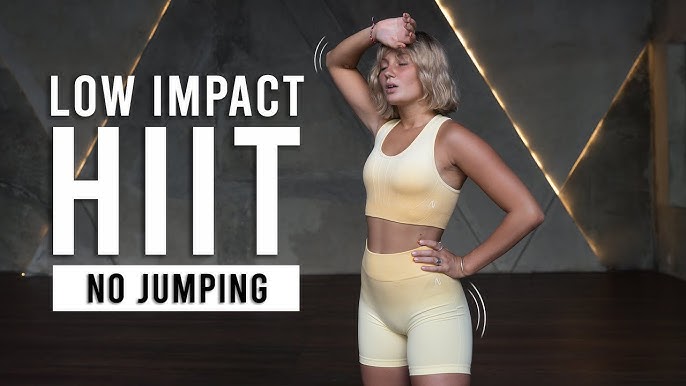
Low-Impact HIIT Workout to Burn Calories Without Jumping
Do you want to lose calories and get fit, but are scared of jumping, running, and bashing your joints? Often, they end up frustrated that when they are doing traditional HIIT workouts their knees are sore and their bodies are tired after every workout. You struggle with it, hoping that it will improve but this never happens. The more you struggle the more your organism rebels. At some point you will reach the point of giving up and thinking that intense fitness results are not meant to be your thing.
Low-impact HIIT is the strong thing which alters everything you believed about high-intensity training. It provides all the energy expenditure and heart rate benefits of conventional HIIT without a single leap or high impact exercise. You are able to give it your full, skyrocket your heart rate and scald serious calorie burns whilst keeping both feet safely on the ground. It is the best technique to use when starting out, when injured, when elderly and when you want actual results without actual punishment. Read this whole guide and learn how low-impact HIIT can work to change how you feel about your fitness today.
The reason why Traditional HIIT Kills so many people.
Conventional HIIT workouts are centered on the explosive jumping exercise such as burpees, jump squats, and box jumps. The forces that these movements exert on your ankles, knees, and hips are enormous with each repetition. This time and again pounding leads to joint pains, inflammation, and overuse injuries which compel you to quit the exercise altogether.
It can also be very psychologically demoralizing and physically demoralizing to many people at the very start. The strength is so overwhelming, the movements are so unsafe, and recovery time seems impossible. Thus, millions of individuals who really desire to get fit just cannot maintain classic HIIT over a few weeks.
When Is Low-Impact HIIT the Right Choice for You
You should use low-impact HIIT when exercising is limited by joint pain, injury or physical condition. Ideally, it works best when you are a total beginner and do not want to overwork your body yet develop cardiovascular fitness. Moreover, it is ideal when you are restarting exercising after a prolonged break or a medical convalescence.
This is also a great training style as it suits individuals who are overweight and that would otherwise feel unsafe or uncomfortable with jumping-related activities. HIIT may be safely used during the second and third trimester by pregnant women with medical guidance on how to use it safely. Also, older adults who desire to keep their heart muscles and metabolism rate active will enjoy the fruits of this light yet powerful method.
What Exactly Is Low-Impact HIIT Training
Low-impact HIIT is the abbreviation of Low-Impact High-Intensity Interval Training, a mixture of effort and recovery periods. The high-intensity ones involve exercising with your highest level of effort in any ground-based controlled motion. The low-impact component implies that you do away with all jumping and work instead with strong standing or stepping movement.
Faster striding, squatting, standing mountain climbers, and power strides are examples of low impact HIIT exercises. These movements will use the same effect as jumping to elevate your heart rate as long as they are done with the right speed and intensity. Furthermore, since both feet are always kept near the ground or in touch with the ground, your joints are not harmed in any way during each and every workout.
How Low-Impact HIIT Burns Calories Without Jumping
The amount of calories burned during any HIIT exercise depends on the intensity of effort, rather than the height or impact of the jump. As you strain your body to achieve 80 to 90 percent of its peak performance, your metabolism will skyrocket. The spike in metabolism lasts hours following your workout until you eat through a process known as excess post-exercise oxygen consumption.
Low-impact HIIT is able to accomplish this same metabolic effect, utilizing speed, resistance, and controlled power in lieu of jumping. Swimming is a vigorous exercise that demands your heart to work hard as you move your arms and utilize your core and give your legs their best. Therefore, your body utilizes the same number of calories when you perform a properly-done low-impact HIIT workout as it does when you perform the jumping-based exercises.
Key Differences Between Low-Impact HIIT and Regular HIIT
The main distinction between the two styles is the intensity they produce on the heart during exercise. Routine HIIT involves plyometric jumping exercises that produce impact forces to increase the heart rate rapidly. In place of heart rate elevation by speed, range of motion, and muscular effort, low-impact HIIT produces the identical effect.
The two styles have the same pattern of working followed by resting periods during the session. They also both lead to similar increases in cardiovascular fitness, metabolic rate, and body composition after a period of time. But low-impact HIIT is even safer, more sustainable and more available to a far broader population.
Best Low-Impact HIIT Exercises to Include in Your Workout
One of the best low-impact HIIT exercises used is fast marching with high knees. Bring the knees as high as your hips will go and swing the arms vigorously. Repeat this movement 30-40 seconds at top speed, to raise your heart rate to a very high level.
Good lower body exercises like squat to standing bicycle crunches will go hand in hand with core workout. Do a bodyweight squat, stand up, and then right away, bring one knee to the elbow that is opposite. Repeat on the other side 30-40 seconds to exercise your legs, core, and cardiovascular system at the same time.
More Powerful Low-Impact HIIT Moves for Full Body Results
Standing mountain climbers are a fantastic low-impact substitution of the conventional floor-based variety. With your back to the wall, with your hands on the wall at your shoulders, push your knees up and down. Do these within 30 seconds as fast as safely possible, to achieve intense cardiovascular (and core) involvement.
Another highly beneficial low-impact exercise to burn calories quickly is lateral speed steps. Go back and forth in a large position with low hips and a tight core. This workout will engage your inner thighs, buttocks and cardiovascular system without any single impact force exceeding the minimums.
How to Structure a Complete Low-Impact HIIT Session
An organized low-impact HIIT workout must include a proper five-minute-warm-up. Warm up by marching, circling arms, hips, and squatting on your body weight. The warm-up is necessary because cold muscles are much more susceptible to strains and tears during strenuous exercise.
The primary workout is meant to be six to eight exercises lasting 30 to 40 seconds each. After every work period, take a 15 to 20 second rest and then proceed to the next exercise. Do two to three complete loops of the circuit, and end with a five-minute stretching and cooling down period.
How Long Should a Low-Impact HIIT Workout Last
An entire low-impact HIIT exercise with warm-up and cool-down ought to take between 25 and 35 minutes altogether. The real working high-intensity interval is usually between 15 and 20 minutes of that time. HIIT training is much more effective with shorter focused sessions than with long unfocused workouts.
During the first two weeks a beginner should only do two rounds of his or her preferred circuit. Progressively increase to three rounds as your cardiovascular fitness and muscular endurance get better and better. Moreover, the quality and intensity of your effort in every work session are much more important than just adding time.
How Many Times Per Week Should You Do Low-Impact HIIT
Novices are encouraged to do impactive HIIT twice or thrice weekly with days of rest between sessions. Your body requires sufficient rest periods to restore muscle fibers, renew energy reserves and get used to training. HIIT requires recovery after every session, and performing HIIT every day results in fatigue, deteriorating performance, and higher risk of injury.
When your fitness has increased in four to six weeks, you can safely increase that to three or four sessions per week. It is always good to listen to your body and always give yourself an extra day of rest when you feel unusually fatigued or sore. Also, low-impact HIIT combined with gentle yoga or walking on the rest days is a lovely way to recover.
How to Modify Low-Impact HIIT for Different Fitness Levels
Absolute beginners must begin with all exercises at a slow and controlled rate. Pay attention to mastering the right movement patterns and only then add the intensity and speed to your work outs. De-acceleration is in fact more muscle-involving and builds you a better fitness base in the long run.
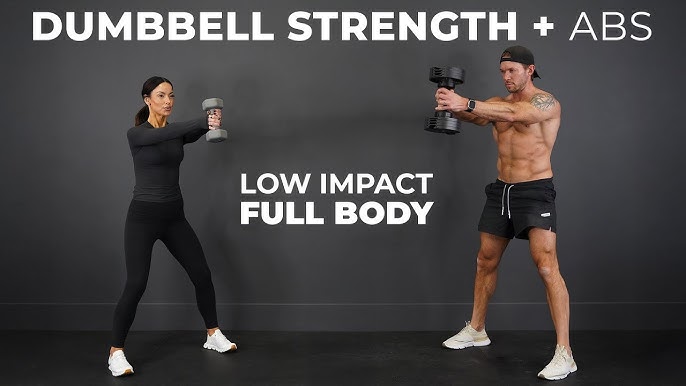
Intermediate athletes can add resistance bands or light hand weights to movements to intensify the workout. The use of small dumbbells when marching and when side stepping doubles the calorie expenditure and muscle workload. Practitioners can also reduce the time spent on rest, extend the amount of time spent working or introduce more rounding to keep the fitness level of advanced practitioners constantly challenged.
FAQs
Can low-impact HIIT be used by those with poor knees?
Yes, one of the most effective methods of cardio exercises that can be used by people with knee issues is low-impact HIIT. By doing away with jumping and other high impact exercises, the main source of knee stress during cardio exercising is also eliminated. Deep squats should never be used when you have pain in your knee. Never try a new exercise program without consulting your physician.
When can I expect results of low-impact HIIT training?
Improved cardiovascular endurance and energy are noticed by most people in the first two to three weeks. A noticeable physical alteration in body composition can usually be seen in four to six weeks of regular training. When low-impact HIIT is coupled with a nutritious and balanced daily diet, results are more likely to be accelerated.
Is it safe to have low-impact HIIT workouts with seniors?
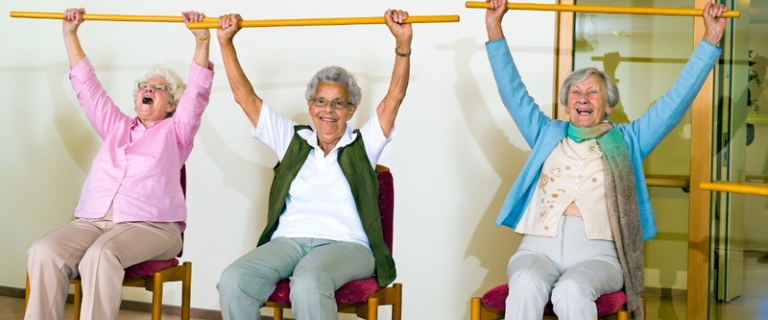
Yes, low-impact HIIT is safe and can be highly effective as long as active seniors desire intensity but not impact. It is also far less taxing on joints, even aging ones, without any jumping involved yet offers an adequate cardiovascular workout. The elderly need to start slow, rest longer and never start without consulting their physician.
What is the distinction between low-impact HIIT and steady-state cardio?
Steady-state cardio: Steady-state cardio is a relatively moderate exercise during the whole course of the workout. Low-impact HIIT switches among maximal intensity periods and brief rest periods many times. HIIT typically generates higher metabolic advantages and afterburn of calories, when compared to steady-state cardio, with much less overall work rate.
Will I require any equipment to do low-impact HIIT at home?
No, you can do a highly efficient low-impact HIIT exercise with nothing more than your own bodyweight. The only thing you really need when doing a non-slip exercise is a comfortable supportive pair of shoes. Later on, resistance bands and light dumbbells can be incorporated so that the workout can be made more varied and challenging with each session.
Is low-impact HIIT more effective than others at reducing belly fat?
Yes, low-impact HIIT is highly useful in losing total body fat including that of the abdomen. High-intensity intervals cause a metabolic spike that burns fat throughout your body in a systemic fashion. It is impossible to spot reduce fat in a particular area but regular HIIT exercise paired with proper nutrition can help reduce belly fat.
Conclusion
You no longer need to decide who to wear to protect your joints and get actual fitness results that count. Low-impact HIIT demonstrates that without so much as a jump, you could be burning serious calories, improving cardiovascular health and changing your body. Now you have learned why regular HIIT fails so many times, what makes low-impact HIIT the only HIIT that works and how to actually organize your own training at home.
Start by having 2 sessions a week, emphasize on giving your all with each working session and gradually increase your routine over time. Each time you finish a session, you are one step closer to a fittest, stronger and healthier you. The worst work-out is the one you never begin. Start your low-impact HIIT today and experience the effective difference.