Pilates for Strength and Flexibility: Low-Impact Moves
Are you stiff, weak, or always tired regardless of the amount of rest you take? Poor posture, tight muscles, and lack of energy are some of the things that bother many people on a daily basis. You exercise various exercises but none of the exercises appear to cure the underlying issue. The actual problem is the majority of exercises concentrate on cardio and heavy lifting without considering the flexibility and core strength as one. This causes your body to be unbalanced, strained and likely to develop an injury in the long run.
Pilates as a method of strength and flexibility is the answer which your body has been longing to get all along. It is a non-impacted form of exercise that develops deep core, enhances posture and makes the person more flexible at the same time. In contrast to vigorous exercises in the gym, Pilates does not act against your body, but with it. It is appropriate to any age, any fitness level and any body type. This full-color guidebook will take you step-by-step through all the information you might need in order to begin the Pilates journey on the safe and confident footing today.
Why so many people are not strong and flexible simultaneously
The majority of the conventional exercises are aimed at developing some strength or enhancing some cardio but they do not pay any attention to flexibility. This causes muscle imbalance in the sense that a few muscles get tight and overworked and others are weak. This imbalance eventually results in back pain, unhealthy posture and regular injuries in the day to day activities.
Flexibility training such as simple stretching does not create the strength required by your body to maintain stability. Thus you require a system that will be both powerful and flexible simultaneously. This is where Pilates fits in unlike all the other forms of low-impact exercise in the market today.
When Is the Right Time to Start Pilates
It is never too late to begin Pilates and the better your fitness level the better it is. To start with Pilates, one does not have to be flexible, strong, or young. Actually, the less weak you are, the more advantage you will have beginning to-day.
Pilates is particularly necessary in case you sit at the desk on a daily basis. It is also perfect following a back injury, joint surgery or a long time illness. Moreover, everyone who experiences stress on a daily basis, feels tired or simply disconnected with his or her body ought to start practicing Pilates as soon as possible.
What Exactly Is Pilates and Where Did It Come From
Pilates is a model form of mind-body exercise system that was invented by Joseph Pilates in the early twentieth century. It was initially designed to assist injured dancers and athletes to gain strength and move about without any harm. It is being practiced by millions of people in the world nowadays regardless of their age and fitness level.
The technique emphasises controlled, accurate movements which involve deep stabilizing body muscles. It focuses on breathing, alignment, concentration and core control in each and every exercise. Besides, Pilates can be carried out on a mat or on special equipment such as the reformer machine.
How Pilates for Strength and Flexibility Works Together
Strength and flexibility Pilates works are achieved through training the deepest postural muscles that are totally neglected by most exercises. These are transverse abdominis, pelvic floor as well as multifidus muscles that assist your spine on a daily basis. The reinforcement of these muscles forms a stable base that enables your body to move more in a safer and more free manner.
Meanwhile, Pilates stretches the muscles and extends them in their entire range of motion. It is this concomitant strengthening and lengthening that makes Pilates unique and effective to the body. Therefore, frequent exercising will result in a lighter, taller, and more flexible body without any extra bulk and tension.
Who Should Practice Pilates for Low-Impact Fitness
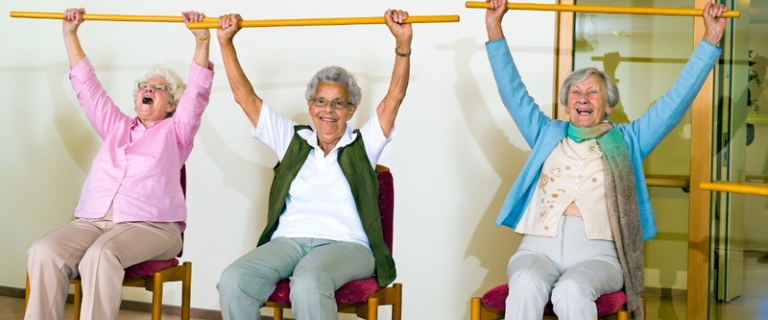
Pilates really suits almost all individuals irrespective of their age and condition. Novice exercisers who have no previous experience of Pilates can safely and comfortably start with the basic mat Pilates. Pilates has been a great boost to the seniors in terms of balance, joint mobility and posture.
Pilates helps athletes to prevent injuries, correct movement imbalances and improve overall performance to a great extent. Pilates is particularly beneficial to pregnant women and new mothers in their recovery of core and strengthening of the pelvic floor. There are also individuals who deal with chronic back pain, scoliosis, or hip issues who tend to have their life transformed dramatically upon the consistent practice of Pilates.
Key Principles That Make Pilates So Effective
There are six principles under which pilates is constructed, which renders it very powerful and effective. These are the concentration, control, centering, flow, precision and breathing in each movement. The understanding and practicing of these principles will help to make a simple exercise a very deep and effective practice, and therapeutic.
The most significant principle in the whole Pilates technique is breathing. Correct breath will stimulate your deep core muscles and will enable you to move more efficiently and with more control. Thus, never mind how to make each exercise right when you are always concerned about the right breathing pattern.
Best Pilates Moves for Strength and Flexibility at Home
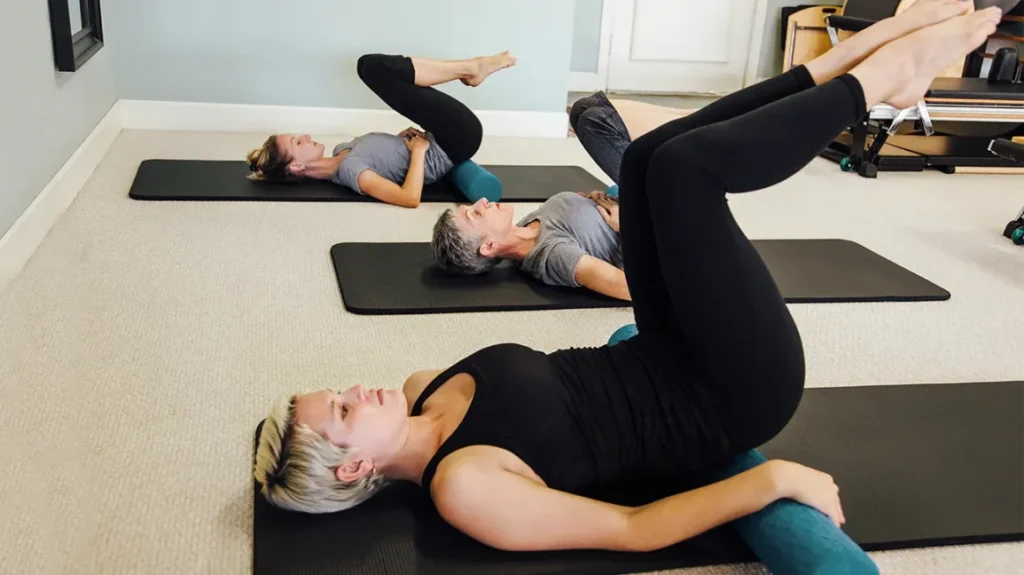
One of the most famous and productive exercises in the technique is the Pilates Hundred which is a core-strengthening exercise. You should lie back on your back with your legs raised to a level that is at a table top and then move your arms in a vigorous manner. The exercise utilizes deep abdominal muscles that help to enhance circulation in the whole body.
Roll Up is the other basic movement which develops both the flexibility of the spine and the strength of the abdomen. Lay on your back, stretch your arms above your head, and roll gradually all the way to your feet all under control. This one movement will extend your whole spine and will also make your core strong much better than the traditional sit-ups could have.
More Essential Pilates Exercises for Beginners to Try
The Single Leg Circle is helpful in improving the hip joint mobility and enhancing the deep abdominal stabilizers. Lay on your back, and reach one leg on the ceiling and make slow controlled circles with your foot. Hold your hips in one position and press your lower back on the mat.
The swan pose is good at working on your back extenders and opens your chest and hip flexors beautifully. Lie on the back, put your hands under the shoulders, and quickly squeeze the upper part of the body upwards. This exercise will reverse the effects of sitting down and in the long run, this will be a great benefit to the thoracic spine.
How Pilates Improves Posture and Reduces Back Pain
One of the major causes of chronic back pain in adults of any age is poor posture. Pilates specifically addresses the deep spinal muscles that help in keeping the spine at the right alignment. Postural imbalances are automatically corrected through strengthening these muscles by practicing them on a regular basis, and it also lowers discomfort that is experienced on a daily basis.
Body awareness, which is the sense of your own alignment, is also taught by pilates as a tool of strength and flexibility. When you have this consciousness, you are automatically more conscious of yourself when you are sitting, when standing, and when walking. Due to these, a high number of individuals complain of major improvement in back pain in only four-six weeks of regular practice.
How to Build a Simple Weekly Pilates Routine at Home
An initiator should take three Pilates sessions a week so that learning can progress gradually to enable rest between sessions. At the beginning, the sessions will take between 20 and 30 minutes. Train the proper posture of every exercise, and then add repetitions or time of session.
The Hundred, Roll Up, Single Leg circle, and Swan might make up a basic one-week plan of a beginner. Finally, include the Pose and Cat-Cow movement of the Child at the end of each session as a rest. Moreover, it is better to record your classes or watch the video tutorials that a beginner uses to remember proper form and be motivated at all times.
How Breathing Correctly Transforms Your Pilates Practice
One of the most changing habits that you can teach yourself during your Pilates practice is breathing properly. In Pilates one also breathes in to pre-empt a motion and out breaths during the actual movement. It is a breathing method that will automatically stimulate your deep core and guard your spine throughout all exercises.
It is the norm with many novices; when performing difficult moves, they end up holding their breath without knowing it. Breathing in causes you to strain your body and it becomes even less effective in every exercise. Consequently, it is always advisable to go with easy, rhythmical breathing at the expense of reducing or simplifying the movement in the short run.
FAQs
Is it possible to be strong and to do Pilates without weights?
Yes, Pilates is a very efficient way of developing the important functional strength with the help of your own weight and resistance only. It works directly on the deep stabilizing muscles that are usually totally missed in the process of traditional weight training. As time goes on, you will find that you have become stronger, more endured and even your muscles are tighter all over your body.
What is the estimated time of results in Pilates?
The majority of beginners report better posture and less muscle tension in two to three weeks. Greater gains in strength and flexibility normally result in six to eight weeks of regular practice. It is a famous quote of Joseph Pilates himself, who said that after ten sessions you will feel different, and after thirty you will look different.
Can Pilates help individuals who have back pain?
Yes, Pilates is among the most suggested exercises that persons with chronic back pain should do. It activates the spinal muscles that hold and shield your lower back in your everyday life. Never leave your condition unreported to your instructor and start with mild modifications of beginner level to be safe.
What is the difference between Pilates and yoga?
Pilates and yoga both enhance flexibility and lessen stress. Nevertheless, Pilates pays more attention to core strength, posture and manipulated exact movement. Yoga uses more spiritual aspects, poses and meditation in the overall approach.
Is it possible to perform Pilates on a daily basis as a novice?
A beginner must begin with three to four sessions a week, instead of one a day. The muscles that you have need a rest period to get stronger by mending and growing. Once the body gets used to it after a few weeks, you can afford to take five or six sessions a week.
Conclusion
It is time to make sure that your body feels strong, flexible and pain free every single day of your life. Pilates as a strength and flexibility method provides you with a time-tested, non-violent, and truly effective method of doing just that. Now you are aware of what conventional exercise causes, why Pilates solves this issue in the most unique way, and how to construct your own practice at home starting with the foundations.
It is important to begin to-day, to work at a good form, and to train three times a day. With each session, you get a step closer to a better posture, less pain, and a more powerful and better-flexed body. Never wait on the right time since the right time is always now. Start your Pilates life today and experience the strong difference it will make in your life.