Best Low-Impact Exercises for Beginners
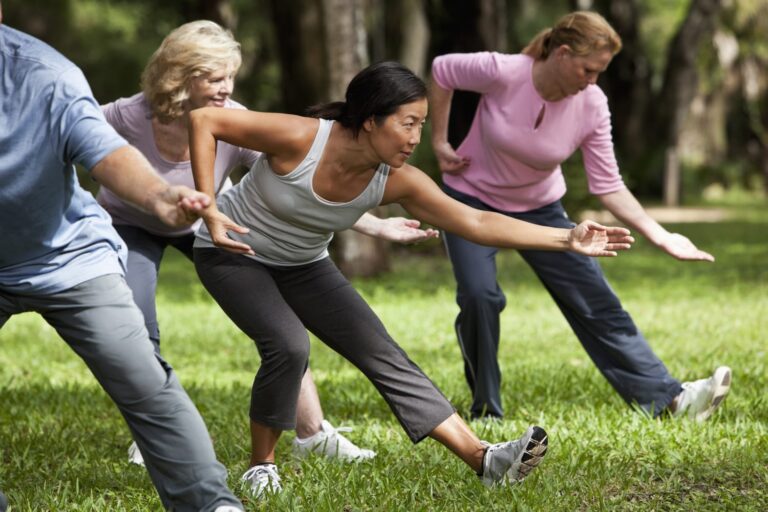
You need not jump up and run, nor make high-intensity exercise your fitness regimen if you are beginning your fitness program. Low impact exercises for beginners can be a great place to start if you are new to exercise, returning after a break, or just need something to start you off that won’t be too difficult.
Low-impact training decreases impact on the joints and joints while still providing you strength, mobility, balance and cardiovascular fitness benefits. As your fitness level improves, the right routine can also be tweaked. This guide will explain the best low impact exercises for beginners, how to set up a beginner low impact workout and how to progress it without making it too hard on yourself.
What Are Low Impact Exercises for Beginners?
Low impact activities involve movements that have low impact, with at least one foot usually staying on the ground, as in activities like running and jumping. Examples include:
- Walking
- Step-ups
- Bodyweight squats
- Glute bridges
- Marching in place
- Low-impact cycling
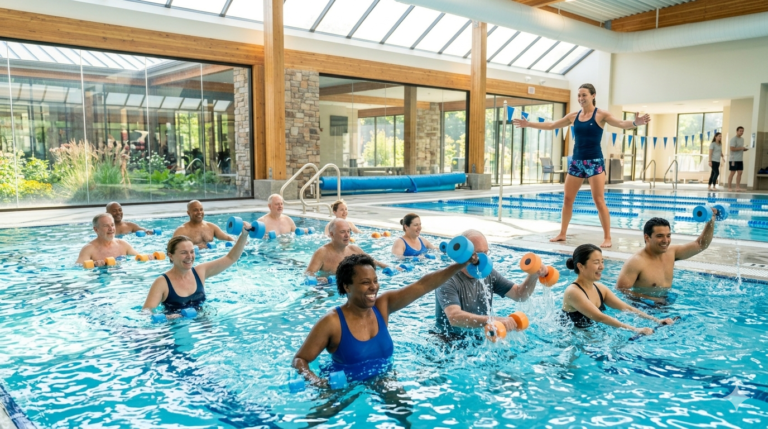
- Swimming
- Controlled lunges
- Gentle mobility exercises
Low impact doesn’t mean ineffective. Even when a workout is well structured, it can be tough on the body and the heart. The primary difference is that the movements are not as hard on the joints as jumping and sprinting or other high impact activities are.
Why Choose a Beginner Low Impact Workout?
A beginner low impact exercise can be more easily made into your weekly routine because the intensity and speed of motion can be controlled. For those who:
- Have not started exercise prior to the assessment.
- Prefer gentler movements
- Interested in improving their fitness level
- Starting to exercise after a hiatus\
- Looking to limit repetitive impact.
- Avoid walking or moderate intensity strength training
But low impact exercise doesn’t always work for all injuries and medical conditions. If the pain is severe or an individual has a medical condition which impacts on exercise, obtain suitable professional advice.
Walking as One of the Best Low Impact Exercises
Walking is one of the easiest low impact exercises for beginners. You can adjust both the length of time and intensity, so it’s easy to make it fit your level of fitness. Begin at a comfortable speed for 15-20 minutes. The length of time, or the rate of walking, can be increased as this becomes easier. For example:
Beginner: 20-minute comfortable walk
Progression: 25–30-minute brisk walk
Next step: Include short periods of faster walking
You may also walk on various surfaces or add some mild inclines as you get fitter. Walking may be done as part of an overall low impact introduction exercise session or as an exercise by itself.
Bodyweight Squats for a Low Impact Workout
Body weight squats can be a good exercise to build lower body muscles without putting any strain on jumping or running. These muscles are primarily the quadriceps and glutes and engage the hamstrings and core as well.
H3: How to Perform Squats
- Stand with your feet around shoulder-width apart.
- Keep chest up.
- Push your hips backwards.
- Bend your knees and lower yourself comfortably.
- Move feet forward to stand up.
Begin with 2 sets of 10-12 repetitions. Aim to reduce the depth of the squat if it is challenging or opt for a solid surface to balance on. As you get stronger, try doing more reps or more sets.
Glute Bridges for Low Impact Exercises
Building a low impact workout plan can also include glute bridges. They work mostly the glutes, and include the hamstring muscles. With your back flat on the mat and knees bent, place your feet flat on the floor. Push through feet, lift hips keeping movement controlled.
Hold for a few seconds at the top and lower down your hips. Repeat 2-3 sets of 12-15 reps. The exercise is non-jumping and is non-running so it can easily be incorporated into a beginning-level program.
Step-Ups as a Beginner Low Impact Workout
Step-ups may be used to strengthen lower body muscles and also to improve cardiovascular fitness. Use a low step or platform, that doesn’t move. Put foot on step and use pushing through the stepping foot to lift the body. Decrease step under control and cross over legs. Start with 8–10 repetitions per leg. The height of the step affects the difficulty.
For beginners, it is advisable to go with a lower surface and to concentrate on keeping balance and control. Avoid any chair that is not stable, or furniture that is not sturdy. The surface should be stable and secure.
Marching for Low Impact Exercises for Beginners
Marching in place is a simple, non-jumping exercise that can help get the blood pumping. Keep your body upright and alternate lifting your knees, swinging your arms as you would normally do. You can perform:
30 seconds march → 30 seconds easy movement
Repeat for 5–10 minutes. When it gets easier, raise the tempo or duration of the march. You can also march as an exercise in the warm-up period, prior to strength training.
Wall Push-Ups for a Low Impact Workout
For beginners, upper body training may be added to low impact exercises as well. If you are currently not able to do floor push-ups, wall pushups are a great alternative to get started. Place hands on wall at the shoulder level, standing facing the wall. With elbows bent, come forward towards the wall with chest and push back. Maintain control of your body throughout the movement.
Begin with 2-3 sets of 8-12 repetitions. As you get into the habit of being stronger, move to wall pushups to incline pushups with a stable elevated surface and then pushups with your hands flat on the floor.
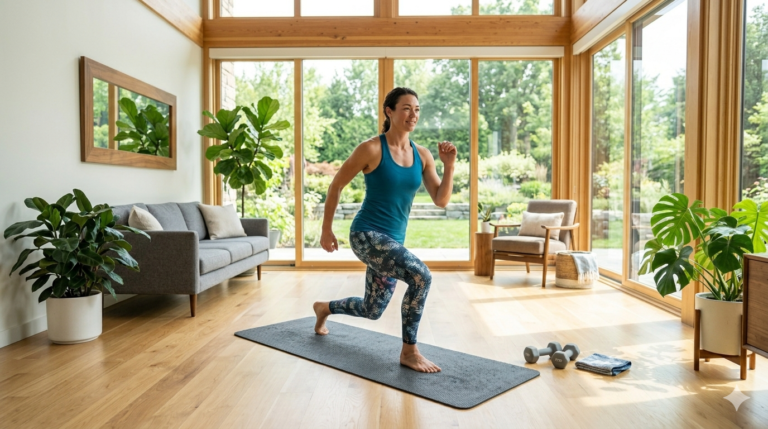
Reverse Lunges as Low Impact Exercises
Reverse lunges are great for de-loading the legs and glutes and can strengthen these parts without any impact. Stand up and step 1 foot back. Lower body under control and then push through front foot back to start position. Begin with 6-10 repetitions of each leg. If maintaining balance is challenging, do it standing next to a stable surface. The goal is to move, not to lower into the floor or do a lot of reps.
A 30-Minute Beginner Low Impact Workout
Multiple exercises can be done in a single workout:
| Exercise | Duration/Repetitions |
|---|---|
| Marching in place | 5 minutes |
| Bodyweight squats | 12 reps |
| Wall push-ups | 10 reps |
| Glute bridges | 15 reps |
| Reverse lunges | 8 each leg |
| Step-ups | 8 each leg |
| Marching | 3 minutes |
| Gentle stretching | 3–5 minutes |
Do strength exercises for 2 sets. If this is your first time exercising, begin with one round, and build up. Take a break of approximately 30-60 seconds between sets, as needed.
How to Make Low Impact Exercises for Beginners More Effective?
Low Impact training doesn’t need to be easy all the time! Once you have gotten stronger, slowly add in more of the challenge.
Increase Repetitions
After becoming comfortable, increase the set to 12-15.
Add Another Set
If you’re already doing two sets, go for three.
Increase Duration
If you’re walking or marching, add an additional 5 minutes to your workout.
Increase Movement Speed
This can be achieved by increasing the demand without adding jumping, because the controlled pace is faster.
Use More Challenging Variations
For instance, start with wall pushups and then move to incline pushups and then regular pushups.
Reduce Rest Gradually
As fitness levels improve, the amount of training can build up a little quicker if rest periods are shortened. Take it slow and don’t make all sessions challenging.
How Often Should You Do a Low Impact Workout?
Three or four low intensity exercise sessions can be started by beginners. Here is a basic schedule you could consider:
- Monday – Beginner low-impact workout
- Tuesday – Easy walking
- Wednesday – Rest
- Thursday – Beginner low-impact workout
- Friday – Light activity
- Saturday – Low-impact workout or walking
- Sunday – Rest
This allows you to get in lots of activity without the recovery that happens between intense training sessions. The schedule can be modified according to the fitness level, daily activity and recovery.
Low-Impact Cardio for Beginners
Running is not necessary for cardiovascular training. These low impact exercises are good for beginners:
- Brisk walking
- Cycling
- Swimming
- Elliptical training
- Marching
- Low-impact aerobic routines
Start with 15-20 minutes and then build up to longer sessions. Here is a simple interval workout example:
2-mins at a comfortable pace followed by 1 min at a brisk pace.
Repeat the process for 15-20 minutes. The faster periods should be more difficult, but still manageable.
Common Mistakes During a Beginner Low Impact Workout
Low impact exercises are typically easy to do but even beginners may be making errors.
Assuming Low Impact Means No Effort
Low impact doesn’t mean ease out! Duration, repetitions and movement speed can be increased as fitness is developed.
Progressing Too Quickly
It is important to not increase all of these at once, as it can result in excessive fatigue. Only vary one variable at a time.
Ignoring Technique
More important than doing a lot of repetitions is controlled movement.
Skipping Recovery
Low impact strength and cardio exercises still need time for your body to recover.
Choosing Exercises That Cause Pain
Sharp and unusual pain should not happen during an exercise. If something is not right, STOP and take the appropriate professional advice if needed.
How to Combine Gentle Workouts With Daily Activity
Structured workout is just one component of your total exercise. Other ways to get more active during the day include:
- Taking short walks
- Walking up and down stairs when necessary.
- Walking during breaks
- Gentle mobility exercises:
- Increased time spent on standing and moving
These are little habits that can be adopted in conjunction with your gentle workouts, without the need for another formal training session. The goal is to develop an active, not necessarily an all-out fitness program.
Final Thoughts on Low Impact Exercises for Beginners
If you are new to fitness, there are some low impact activities that are a great option to begin or continue your workout program without resorting to lots of jumping or other high-impact activities.
These exercises—walking, squats, glute bridges, step-ups, marching, wall push-ups, and reverse lunges—can all work the big muscles and boost overall fitness. Begin with a slow pace beginner low impact exercise, work on technique and add time, reps or difficulty.
There is no need to be extreme in low impact training. The most important factor is consistency. Make choices of movement that are comfortable, give sufficient recovery time and slowly increase fitness over time.