How to Exercise at Home Without Equipment: A Complete Beginner’s Guide
It doesn’t require a gym or costly equipment to be active and develop strength. It is possible to perform an effective with the correct moves and a steady workout plan home workout without equipment using only your body weight. If you’re looking to get fit, build strength, lose fat or simply get active, bodyweight workout at home routines can be used as a viable practice starting point.
The principle is to select exercises which work different muscle groups and to increase the intensity of your workouts over time. This guide will help you to make a good no equipment workout, what exercises to perform and how to arrange your workout.
Why Choose a Home Workout Without Equipment?
The first and foremost benefit of at-home workouts is that they’re convenient. You can work out whenever you’re able, but not at a gym. A home workout without equipment can also be modified to various fitness levels. Simple movements may be used by beginners or more complex or difficult variations can be used by those more advanced. Other benefits include:
- No gym membership required.
- Minimal space needed.
- Flexible workout times It can easily be used with other activities.
- Suitable for beginners.
- Can be adjusted to various fitness goals.
But bodyweight exercise is not without proper technique and consistency. Just any random exercises will not translate to good results.
How to Structure a No Equipment Workout
A balanced no equipment workout should contain movements that work the major muscle groups. The simple structure is:
- Warm-up: 5 minutes.
- Lower-body exercises: 2–3 movements.
- Upper-body exercises: 2–3 movements.
- Core exercises: 1–2 movements.
- Short cardio activity: 1-2 exercises.
- Cool-down: 3–5 minutes.
For the beginners, the recommended time is 20-30 minutes to begin. You can increase the length of time as fitness levels improve.
Best Home Exercises for Beginners
There are numerous excellent home exercises you can do at home without any equipment. Begin with movements that are safe and are performed well..
Bodyweight Squats
One of the best lower body exercises is the squat. They mainly target the quadriceps and glutes and activate the core.
How to perform:
- Keep your chest lifted.
- Move hips back and bend knees.
- Lower yourself comfortably.
- Move feet back to a stand-up position.
Start with 2–3 sets of 10–15 repetitions.
Push-Ups
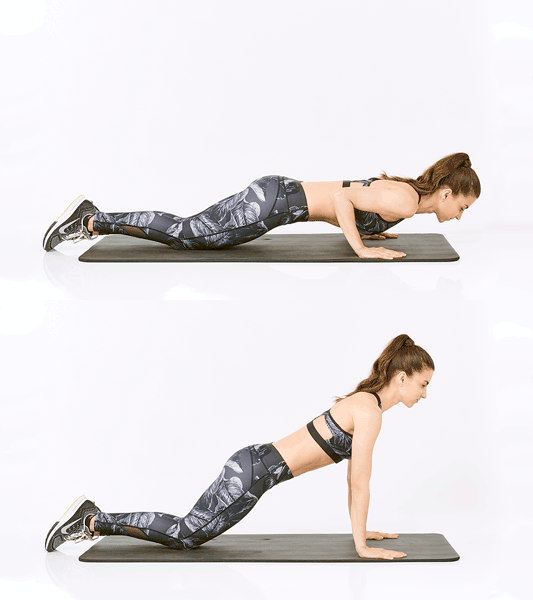
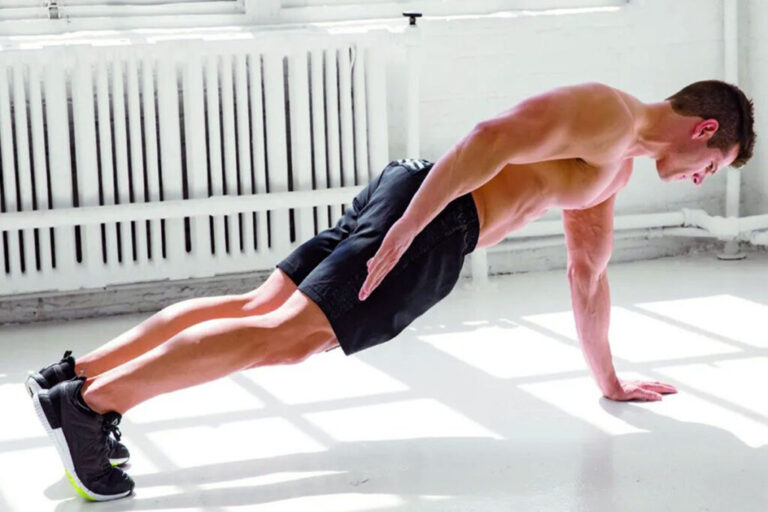
Push-ups work the chest, shoulders, triceps and core. Do standard push ups, if possible, but if that is difficult do the push ups with knees on the floor or against a wall. Intermediate target: 3–4 sets of 5–12 repetitions.
Advanced target: 4–5 sets of 5–12 repetitions. Aim to keep your body straight while doing your reps, don’t rush through them.
Glute Bridges
Glute bridges are great exercises for hip strength and strengthening the glutes. Lying face-up, bend your knees and place your feet on the ground. Lift your feet through and lift your hips, so that your body is relatively straight from your shoulders to your knees. Stop for a while at the top before dropping. Perform 2–3 sets of 12–15 repetitions.
Reverse Lunges
Reverse lunges work legs and glutes and provide balance challenge. Step back with one foot, bending both knees, and then straighten your legs. Straighten back out and back to starting position. Perform 8–12 repetitions per leg. If balance may be a problem, lean up against a wall for support.
Upper-Body Bodyweight Workout at Home
You can also train your upper body properly without using weights.
Incline Push-Ups
If it’s too difficult to do push-ups, put your hands on a solid elevated surface like a sturdy table or countertop. This decreases the weight on your body while still working out the chest, shoulders and arms. As you get stronger, slowly work up to regular push ups.
Pike Push-Ups
Pike Push-ups target the shoulders more. Bend elbows and lower head towards the floor, then push up again, starting in a similar position to the downward facing V position. This is harder than a regular push-up and beginners should work on executing the reps properly.
Plank Shoulder Taps
Plank shoulder tap is a combination of core stability and upper-body control. Stand on one’s toes in a high plank position. Raise one arm and tap on the other shoulder, then repeat on the other arm. Maintain as stable a hip position as you can. Try 2–3 sets of 8–12 taps per side.
Core Exercises for a Home Workout Without Equipment
Building a solid foundation allows you to move dynamically and will allow you to get a good posture on a lot of exercises.
Forearm Plank
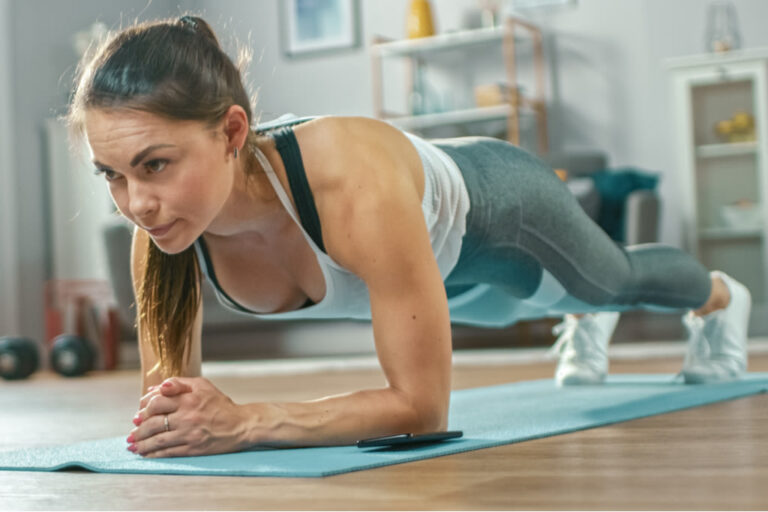
The plank is a great core workout, and it’s very easy. Elbows should be kept under the shoulders and your body straight. Keep abdominal muscles tight and don’t let hips drop. The beginners’ start is 15–30 seconds and then take it step by step and slowly build up the length of time.
Dead Bug
The dead bug can be controlled moving while working the core. While lying on their back with their arms up and knees bent. Extend the other arm and leg slowly keeping the lower back controlled against the floor. Come back to the starting position and cross over the other side.
Perform 8–12 repetitions per side.
Mountain Climbers
Mountain climbers make a cardio component to your home exercises. In a high plank position, alternate moving both legs towards your chest. It’s important for beginners to work on movement control before speed.
A 30-Minute No Equipment Workout
Exercises above can be performed to a full-body workout.
| Exercise | Sets/Repetitions |
|---|---|
| Bodyweight squats | 3 × 12 |
| Push-ups | 3 × 8–12 |
| Reverse lunges | 2 × 10 each leg |
| Glute bridges | 3 × 15 |
| Plank | 3 × 20–30 sec |
| Mountain climbers | 2 × 20 |
| Dead bug | 2 × 10 each side |
Rest for approximately 30–60 seconds between sets. If you’re a beginner, begin with lower numbers of sets to build up gradually.
Turn Your Bodyweight Workout at Home Into a Circuit
Alternatively, circuit training can be used. Don’t do all sets of one exercise before going onto the next, do one set of each exercise and repeat the whole set. For example:
- 12 squats.
- 8 push-ups 10 reverse lunges on each leg.
- 15 glute bridges.
- 20 mountain climbers.
- 20-second plank.
Repeat for 1-2 minutes and for 2–4 rounds.
Circuit training can make your home workout without equipment more time efficient and adds to the cardiovascular challenge.
How Often Should You Do Home Exercises?
For those beginning, they can begin with three full-body workouts per week.
For example:
- Monday – Full-body workout Exercise caution.
- Tuesday – Rest or light walking.
- Wednesday – Full-body workout.
- Thursday – Rest.
- Friday – Full-body workout.
- Walking, stretching or recovery activities are indicated over the weekend.
It’s not always necessary to work hard and get it in everyday. Recovery allows your muscles to adapt and helps you maintain consistency. Activities like walking can be combined with no equipment workout on non-training days.
How to Make a Home Workout Without Equipment More Challenging
The mistake many people make is believing that bodyweight exercises can’t be challenging enough. There are different ways to make it more challenging:
Increase Repetitions
When 10 repetitions of the squat become easy, progress to 12-15 reps.
Add More Sets
Can increase from 2 sets to 3 sets or 4 sets.
Slow Down the Movement
If you’re taking 3 seconds to lower yourself during a squat, then it’s more challenging without increasing your weight.
Use Harder Variations
Move onto incline push ups, then regular push ups and then more advanced push ups.
Reduce Rest
With improved fitness, rest periods can be shortened a bit, which can push the heart rate up a bit. Increase intensity slowly, not too much, too soon.
Common Mistakes During a No Equipment Workout
The basics of bodyweight training are easy, but there is technique involved.
Doing Too Much Too Soon
If you begin with an advanced routine, you may experience excessive soreness and not be able to stick to it.
Ignoring Technique
Increased repetitions are not better than bad form. Do each movement in a controlled range of motion.
Training the Same Muscles Every Day
Muscles require a recovery period. Rest in-between pushes of more difficult full body workouts.
Skipping the Warm-Up
Warm ups get your body ready for exercise and help you to start slowly.
Having No Progression
Doing the same exercise routine over and over without variation can eventually slow the progression of results. Increase repetitions, sets, difficulty or control over time.
Warm-Up and Cool-Down for Home Exercises
Take about five minutes to warm up your body prior to exercise. You can include:
- Marching in place.
- Arm circles.
- Bodyweight squats.
- Hip rotations.
- Gentle lunges.
Slow down as you train and do gentle stretches of the muscles you have exercised. The warm up and cool down should not be difficult. It is more important to have a consistent routine than a long one.
Can You Lose Weight With a Home Workout Without Equipment?
Yes, body weight training can help you achieve weight management, but it’s not the only factor. Weight loss is normally a function of an appropriate energy balance over a period of time. Exercise boosts energy expenditure and helps to preserve or build muscle.
Combining a home workout without equipment with regular walking, quality protein, well-balanced meals and good sleep habits can help establish a more sustainable fitness regimen. Your results, however, will vary based upon various factors including nutrition, activity levels, training consistency and individual differences.
Final Thoughts on a Home Workout Without Equipment
There’s no need to join a gym before you begin improving your fitness. A well-structured home workout without equipment can work the entire lower body, upper body and core and build strength and overall fitness. Start with manageable home exercises, do practice proper technique and train regularly.
Once fitness has improved, do more repetitions, sets or make exercise harder. Not all routines are necessarily the longest or hardest. It is the daily practice that a person can do safely and over time. It’s the daily practice that a person can do safely and over time.