Military Workouts at Home: Complete Training Guide for Strength and Fitness
Military fitness is among the most admirable and goal oriented training regimens globally. Soldiers develop supernormal strength, stamina, and psychological stamina in a well-structured, rigorous training program. Even better, you do not have to have a base, barracks or special equipment to train to be like a soldier.
Home-based military exercises provide you with the same training principles that can make military elites fit. These exercises involve body weight exercises, high intensity circuits and progressive programming that build up true functional strength. You simultaneously develop cardiovascular stamina, muscle power and psychological toughness.
This guide will include all you need to train to be a soldier at home. You will discover the most effective military workouts, workout routines and how to improve your training progressively. Be it that you are training to get into the military or you just want a more rigorous and efficient exercise regimen, this guide will give you all you want.
What Makes Military Fitness Training Different?
There are a number of differences that exist between military fitness training and regular gym workouts. It focuses on functional strength and stamina rather than looks and muscle-building. The body of soldiers must be able to function in extreme physical and mental conditions.
The basis of all military-training programs in the world is functional fitness. All exercises produce strength, speed and endurance which is directly transferred to the physical requirements in the real world. You will never find a solitary bicep curl or leg extension in an army training program.
Mental hardiness and physical growth are also given priority in military training. Overcoming the urge to quit your workout during a hard exercise develops the mind into an extraordinary level of strength. This psychological power is transferred directly into all the stressful circumstances you get into in your everyday life without training.
Moreover, military training puts a great emphasis on body weight control as the basis of physical fitness. The fundamental elements of military fitness tests around the globe are push-ups, pull-ups, sit-ups, and running. These basic movements form a complete athletic base with no equipment at all.
Key Principles of Military Workouts at Home
Progressive Overload
All successful military training programs use a steady increase of overload over a period of time. You get more difficult by including repetitions, sets, or decreasing the rest between exercises. Your body becomes accustomed to new challenges and becomes stronger, faster and more resilient every week.
High Intensity Training
Military training challenges your body to put forth high intensity during all the sessions. Brief intervals of rest maintain your heart rate higher and burn more calories in training. Under high intensity training, muscular endurance and cardiovascular fitness are developed simultaneously each time.
Compound Movements
Compound movements are almost the sole type of military training that involves multiple muscles. Several muscle groups are involved whenever a push-up, squats, burpees, and pull-ups are performed. Compound movements are more efficient at carrying out more functional strength in a shorter period of time than isolation exercises always.
Consistency and Discipline
Military fitness outcomes are achieved through attendance at all sessions each week without excuses. Ad hoc training yields no significant fitness gains no matter the intensity of the workout. A soldier is expected to do his duty and responsibilities on a daily basis.
Military Workouts at Home: Core Exercises
Home based military exercises are based on time tested body weight training. Such movements build up the entire body fitness that a military service requires day after day.
Push-Ups
The most basic exercise in any military fitness program around the globe is push-ups. A natural pattern of pressing movement makes them strong in the chest, shoulders and triceps. Push-ups are part of the US Army physical fitness test that is a regular assessment exercise.
How to perform:
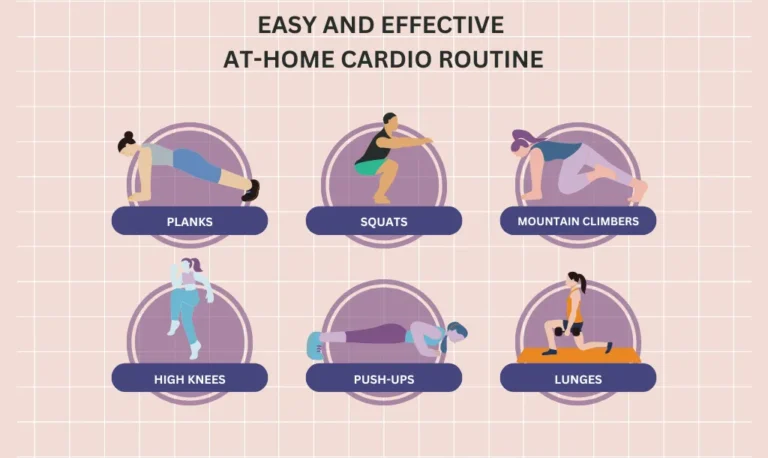
Begin with a high plank with hands a little more than shoulders apart. Bend your chest downwards to the floor keeping the whole body straight. Blast up with a straight arm fully extended each repetition. Do 4 sets of 20-30 of them with a 45-second break between the sets.
Military variations:
- Wide push-ups to build the chest.
- Diamond push-ups to strengthen triceps.
- One-sided push-ups to develop unilateral strength.
- Power and fast twitch muscle activation explosive push-ups.
Pull-Ups
The final military fitness exercise is the pulling exercise of the upper body, the pull-ups. They strengthen your latissimus dorsi, biceps and rear deltoids, all in one movement. Pull-ups are a common testing tool of upper body strength in many military fitness tests.
This exercise can be done by installing a doorframe pull-up bar which costs less than twenty dollars. Hang comfortably off the bar with a distance between the hands that is a little bigger than shoulder. Raise your chest towards the bar pushing the elbows downwards and backwards with power. Slowly and gradually increase to a dead hang and then decrease to a dead hang on each repetition. Do 4 sets to the point of exhaustion with 60 seconds of rest between each set.
Sit-Ups and Crunches
Any physical requirement that the military service has on the soldiers must be supported by core strength. Sit-ups work on your rectus abdominis, hip flexors, and core muscles at the same time. Sit-ups are a common core strength test that is used as part of military fitness tests throughout the world.
Lie down on your back with knees bent at right angles and feet on the floor. Put your hands behind your head or across your chest. Rise all the way till your elbows meet your knees each full time. Down with control to lower back and repeat the target repetition count. Do 4 x 25 to 40 reps with 45 seconds of rest between them.
Burpees
The only military conditioning exercise that is complete is the burpees. They squat, push-up, and jump all in one fierce and effective movement. Burpees are strengthening, cardiovascular and mental toughness in a single exercise.
Straussen mit jemandem von der Seite herunter. Immediately, jump backwards and get in a high plank push-up position with your feet. Do one full push-up and jump your feet back up towards your hands. Jump up, keeping hands above head at the top. Do 3 rounds of 15 to 20 reps with 60 seconds of rest between each round.
Bodyweight Squats
Squats build leg and glute muscle needed to perform the physical tasks of the military. Powerful legs support heavy weight, overcome barriers and maintain long-distance performance. High volume squats are always part of military training to develop the whole body.
Naturally stand with feet shoulder wide with toes facing a little outward. Bring your hips down to the floor till your thighs are at a right angle with the floor. Foot strike through heels and stand up with full hip extension at the top. Do 4-sets of 20-30 reps with a 45-second rest between sets.
Mountain Climbers
In a single workout, mountain climbers are able to gain both core fitness and cardiovascular training. They work your abs, hip flexors and shoulders and keep your heart rate going. Mountain climbers are regularly implemented by military trainers as conditioning circuits and warm-up protocols.
Begin with a high plank with your body as a straight line. Bring one knee as close to your chest as possible and at a high speed. Run rapidly alternating legs but keeping hips straight. Do 30 to 45 seconds 3 times with a 30 second rest in between.
Lunges
Lunges strengthen single legs, balance and coordination important to military performance. They help build your quadriceps, hamstrings and glutes in a functional motion. Another popular one is walking lunges, which are used in physical training of the military around the world.
Stand erectly then move one foot in a long stride with the other foot. Bend the back knee to the floor till both legs are at 90 degrees. Use your front heel in the reverse to come to the starting position in the standing position. Walking lunges: alternate leg steps in the area you have available to walk. Do 3 sets of 20 reps of each leg with 45 in between sets.
Plank Hold
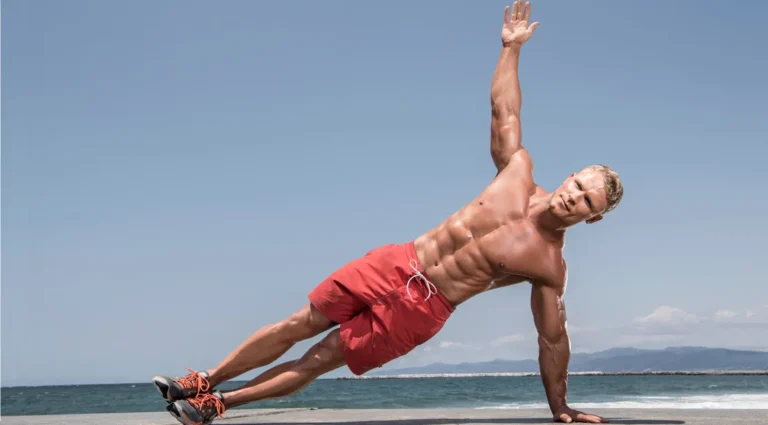
The plank develops the deep core stability, which is required throughout military physical performance. It works your transverse abdominis, obliques and spinal stabilizers at the same time in each hold. Planks are trained on by the military trainers in order to develop postural endurance required by the soldiers during the strenuous activities.
Get into a forearm plank position with elbows directly beneath your shoulders. Maintain a straight posture of the whole body, head and heels. Tighten your core and inhale in a steady manner without losing your hips. Duration per set is 45 to 90 seconds, and 3 sets. Take 30 seconds of rest in between plank holds in your training session.
Advanced Military Workout: The Pyramid Protocol
One of the traditional military fitness training techniques is the pyramid protocol which is used to develop serious fitness in a short period of time. Begin with a few repetitions and then go up to a high repetition then go down to a low repetition.
Push-Up Pyramid:
2, 4, 6, 8, 10, 8, 6, 4, 2 repetitions with 20 seconds rest between each level.
Sit-Up Pyramid:
5, 10, 15, 20, 15, 10, 5 repetitions with 20 seconds rest between each level.
Squat Pyramid:
5, 10, 15, 20, 25, 20, 15, 10, 5 repetitions with 30 seconds rest between each level.
Have a full pyramid circuit in each session to maximize conditioning. This is a technique that develops both muscular stamina and mental hardiness at the same time each session.
Military Workouts at Home: The AMRAP Method
Home based military exercises tend to employ AMRAP to achieve optimal conditioning outcome. As Many Rounds As Possible is called AMRAP and is used in a given time period. It is similar to the intensity and the mental demands of actual military physical training.
AMRAP Circuit 20 Minutes (Military):
- 10 push-ups
- 10 squats
- 10 sit-ups
- 5 burpees
- 10 mountain climbers
Maximum amount of full circuits of this circuit in 20 minutes straight. Until there is a complete need to, and endure pain like a disciplined soldier. Record the number of rounds that you have finished and challenge yourself to surpass this number in the next session.
Nutrition for Military Style Training
Protein Intake
Consume at least 1.6gms of protein per kilogram of body weight on a daily basis. Protein helps to repair muscle tissue that is damaged during military training involving high intensity. Chicken, eggs, fish, Greek yogurt, and legumes are good sources and should be eaten on a regular basis, daily.
Carbohydrates for Energy
During each military training, your body requires a lot of energy. Carbohydrates provide energy to power high intensity training and aid performance during training. Diet: Consistently eat oats, rice, sweet potatoes, and fruit around your training sessions daily.
Hydration
Be adequately hydrated prior to, during, and following each individual training session. Dehydration decreases performance, recovery, and exposure to injury during training. Consume at least 3 liters of water daily and increase during vigorous training.
Military training at home.
Week 1-4: Develop the Foundation.
Work on proper form of all exercises and then work towards volume and intensity. Finish all the repetitions on each set with a perfect technique. Take adequate breaks between sessions and sleep to maximise recovery and adaptation.
Week 5-8: Volume Increase.
Each exercise has one extra set in every training day of this phase. Decrease rest intervals by 10 seconds per every two weeks in order to train harder. During this stage, your body adjusts fast and fitness is seen to improve significantly every week.
Week 9 and Beyond: Advanced Techniques.
Add more advanced forms of exercise such as explosive push-ups and one leg squats gradually. Introduce weighted pack training to add resistance to squats, lunges and push-ups. Always include longer AMRAPs and more advanced circuit training programs.
FAQs
Do home military exercises help to acquire real fitness?
Yes absolutely. Home military exercises create real strength, stamina and toughness of mind. The elite fitness results in the military training of the same bodyweight techniques results in the same elite fitness in civilians.
What number of days a week do I need to do military workouts at home?
Always: Train 3-4 days a week, separated by a day of rest. This frequency is effective in terms of fitness development and it also gives sufficient rest between rigorous training programs.
Does home workouts in the military help in adding muscle mass?
Yes. Big muscle mass is gained through high volume push-ups, pull-ups and squats over regular months. The increased difficulty through more challenging variations keeps the muscle development going in the long-term.
Will I require any equipment to do military exercises at home?
No. Exercises in the body alone provide a full military training program at home. You can get a doorframe pull-up bar, less than twenty dollars, which will open up your exercise choices in a big way.
What is the duration of each military home workout?
The optimal amount of time spent in military home workouts is between 30-45 minutes. It is much more about quality, intensity and consistency than length of sessions in achieving real fitness results.
Is it safe to begin military exercises at home?
Yes. Begin with the beginner plan and give full attention to the right form and then build up volume. Gradual development over weeks and your body will adjust safely to more and more training loads.
When will military home workouts give me results?
In a few weeks (3-4 weeks) of regular training, most individuals observe the improvements in strength and endurance. The visible fitness changes are those that usually come about between 6 and 10 weeks of the routine progressive military training at home.
Conclusion
Military fitness creates some of the strongest, most resilient and most capable bodies in the world. The kind of training that soldiers get on a daily basis perfectly translates into good exercises that can be done at home. You do not require a gym, costly equipment and a personal trainer to work out like a soldier every day.
Home-based military exercises provide remarkable fitness outcomes via discipline, routine and gradual training. Push-ups, pull-ups, burpees, squats, and sit-ups make a complete training system, which will develop real functional fitness. Adhere to the systematic steps in this guide and take one step at a time in a systematic manner each and every week.
The most significant benefit of home military exercises is that it develops physical and mental strength. Whenever you grind through a tough workout or finish a punishing AMRAP circuit, you become mentally tougher. That psychological strength maintains into all the aspects of your everyday life even after the exercise.
Make a beginner’s plan today. Regularly train 3-4 days a week. Consume protein in adequate amounts, remain hydrated and make sleep a priority, to maximize recovery. Allow your body time to work, 8-12 weeks before you truthfully assess your efforts. Your training will change tremendously and your self-confidence will increase with each training session completed.