Build Muscle or Lose Fat: Which Goal Should You Choose First in 2026?
Most amateurs pose the question of whether they need to build muscle or lose fat first. The question is one of the most popular fitness questions since both objectives demand varying nutrition plans and training techniques. As such, making the right decision can save months of time wasting. It also helps avoid frustration when the progress seems slow. There are individuals who desire a slender waist and exposed stomachs. The rest desire larger shoulders, slater legs and larger size in general. Nevertheless, you need to be advised by your present body composition.
When individuals search to build muscle or lose fat, they normally want quicker outcomes. The fact is that development lies in adhering to the correct course of action. Having a clever strategy is much more effective than haphazard exercising and starving. In addition, you are able to remain inspired by realistic expectations. The guide will describe how you can select your first goal successfully. It also discusses exercises, diet, schedules, and fallacies. At the end, you will be sure of the next best step.
What Is the Difference Between Building Muscle and Losing Fat?
Building Muscle Explained
Muscle building refers to the process of adding lean mass by resistance training. This normally involves the use of weights on a regular basis and testing your body. Moreover, you should have sufficient calories in your muscles to have adequate time to recover after exercises. A slight excess of calories is usually useful in fueling new growth. Protein consumption is also crucial as muscles require amino acids to repair themselves on a daily basis. Eggs, chicken, fish, yogurt and beans are all good.
Progressive overload in the course of training is another crucial consideration. This involves adding weight, and reps or volume of workouts over time. Stagnation leads to the end of your body developing and slowing down of muscle growth. Thus, training can be made more difficult in a regulated manner. Most of the time when individuals pose the question build muscle or lose fat, very skinny people tend to gain muscle first. They require size, strength and superior body shape.
Losing Fat Explained
Losing fat refers to the decrease in body fat by means of deficit of calories. You have to consume less energy than is used by your body. Thus, regulating the amount of calories consumed forms the basis of fat burning. Various individuals however lose muscle due to improper dieting. This is why resistance training is still a key part at this stage. Weight lifting indicates to the body that it must maintain lean tissue when on a diet.
Fat burning can occur through cardio training as well. Strolling, biking, swimming or intervals are also useful in burning extra calories. Nevertheless, eating continues to be more important than prolonged cardiovascular workouts. Thus, engage in physical activity with intelligent dieting. Individuals who have excess body fat will tend to ask: Build muscle or lose fat first. Typically, the initial fat loss is more visible and has superior health results.
How to Decide Which Goal Comes First
If You Have High Body Fat Percentage
To lose fat first is normally helpful when you have a high body fat percentage. This method enhances endurance, movement and self-confidence comparatively fast. Additionally, most individuals are made to feel less weighty and healthier due to the loss of excessive fat. You can also get more sleep and be more active in the daytime. Such advantages can simplify training in the future and make it more enjoyable.
Insulin sensitivity and hormone balance can be greatly enhanced by fat loss. Thus, subsequent stages of muscle gain can be more efficient. Begin with an average calorie deficit and frequent strength training at least once a week. Include walking frequently since it aids in healing and energy consumption. The overweight beginners generally gain more by cutting initially when posed with the question of building muscle or losing fat. It provides a better base on which to build on.
If You Are Very Skinny
In case you are underweight or inherently very thin, it can be more beneficial to first build muscle. It is possible to enhance strength, posture and body shape with the help of a lean bulk. Hence, consuming sufficient calories is of paramount importance at this stage. The reason is that many of the skinny beginners fail simply because they do not eat enough food per day.
Eat with a slight calorie excess rather than eat a lot. This contributes to building muscle and prevents unwarranted fat storage. Concentrate on compound lifts such as squats, presses, rows, and deadlifts once in a week. Moreover, get enough sleep and eat protein daily. Confidence and strength generally go hand in hand as time passes. Very skinny people tend to gain muscle first, when people ask to build muscle or lose fat.
If You Are Skinny Fat
Skinny fat is typically low muscle mass coupled with moderate body fat. Body recomposition is sometimes the most intelligent place to begin in this situation. So you will be able to gain muscle and at the same time you will be losing fat gradually. This is particularly effective with novices or those who have taken a break.
Consume close to energy needs but protein consumption is high on a daily basis. Then, proceed with systematic strength training three to four times a week. Since novices are quick to respond, it can take months to see the gains. A lot of patience is essential in this process since changes do not happen at once. Nevertheless, body shape tends to be enhanced more than the extreme bulking or cutting stages. Skinny fat people usually perform best with recomposition before making a decision on whether to build muscle or lose fat.
Can You Build Muscle and Lose Fat at the Same Time?
Yes, it can be with the appropriate conditions. This is what is referred to as body recomposition within the circles of fitness. It entails becoming lean and losing body fat at the same time. Novices tend to recompose more than advanced lifters. Similarly, individuals who have been away for a long time tend to react fast on their return. Thus, the approach fits a variety of individuals making a new beginning.
When undergoing recomposition stages, protein consumption must be high. Eat balanced foods that aid recovery and performance each day. The resistance training should be difficult and progressive every week. Moreover, sleep and stress management also influence the outcome. Sleep deprivation may make people hungry and minimize the effectiveness of workouts negatively. Though it might seem like progress is slower, mirror changes and strength gains can usually get better.
Recomposition is the term that is usually forgotten when individuals request to build or lose weight. Nonetheless, it may be the ideal compromise for most beginners. Rather than going towards one extreme, you enhance the two areas in a gradual way. As such, it is an option that is viable to balanced transformations.
Best Diet Strategy for Each Goal
For Muscle Gain
Muscle building typically requires a minimal amount of calories per day. Approximately 200 to 300 additional calories can be effective. Thus, shun the huge bloating periods which bulk on so much body fat in a short time. The intake of protein is to remain high during the week to recover. Carbohydrates also help in the training energy and in improving gym performance. In the meantime, healthy fats are beneficial in hormone production and well-being.
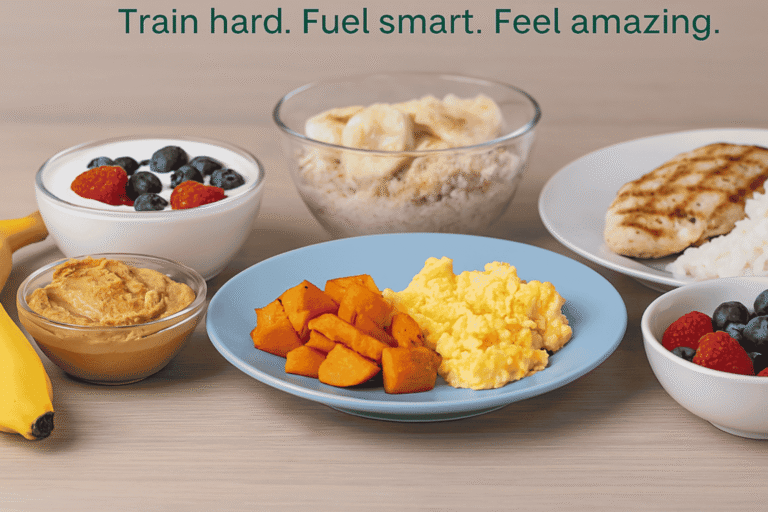
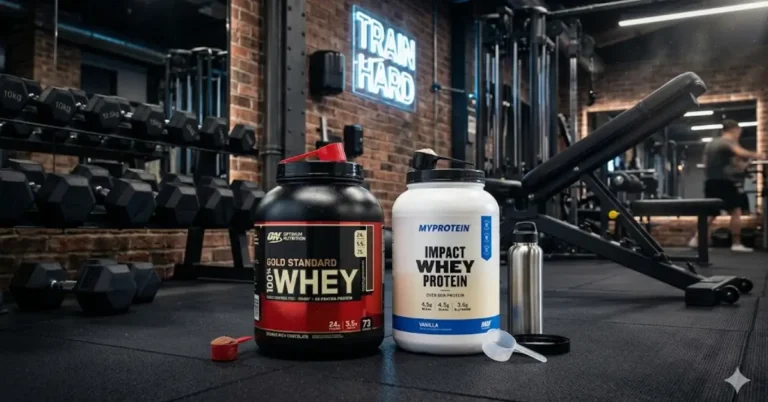
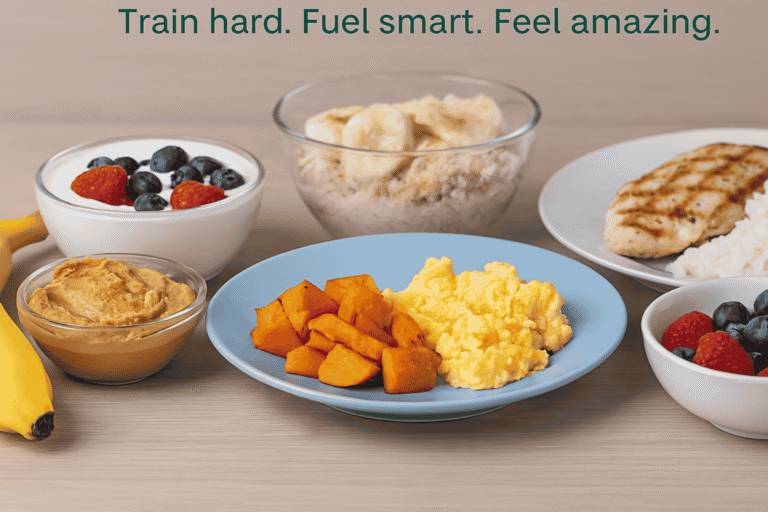
Whenever possible, eat entire foods as they are more nutritious. Rice, oats, potatoes, eggs, meat, fruit and dairy are very useful. Moreover, shakes may be implemented in the hectic schedules. Monitor body weight once a week and calorie intake gradually. In the case of a stall in progress, add a bit more food and track changes. Underweight people tend to take advantage of this strategy first when making a decision between building muscle or losing fat.
For Fat Loss
To lose fat, a moderate amount of calories has to be deficient. Typically, it is effective to cut back on 300 to 500 calories. Thus, drastic crash diets are not usually long term. Protein consumption is high as it can be used to protect the muscles in the process of weight loss. Fiber foods also maintain hunger at bay longer. Good options include vegetables, fruits, oats, beans and potatoes.
Take water at regular intervals and limit the number of calories in liquids daily. Sweet foods and beverages tend to retard growth without providing satiety. Hence, the drink options are more significant than some may think. Preplan meals since consistency is always better than motivation. Poor choices are less probable when food is prepared. When you question building muscle or lose fat, individuals with excess fat tend to begin here effectively.
Best Workout Plan for Both Goals
Strength training assists in gaining a lot of muscle as well as losing fat. So, it must be your foremost exercise focus each week. Three or five sessions per week suffice most individuals. Train using compound exercises since they train more than one muscle. Good options include squats, deadlifts, rows, presses and pull ups.
Progressive overload is relevant no matter what your primary objective is. Increase reps, sets or weight over time. This is an indication of growth and continued strength is on an upward trend. Cardio has the potential to maintain health and calorie management per week. Nevertheless, excess cardio can decrease the quality of recovery. Thus, moderate sessions are to be used wisely next to strength workouts.
Each week, recovery is also a topic to take seriously. Get seven-nine hours of sleep as much as possible at night. Moreover, rest days assist muscles and joints to recover well. When individuals get questions on building muscle or losing fat, the response will always have regular strength training as a first option.
Common Mistakes to Avoid
Most individuals engage in too much cardio to lose fat. Nevertheless, long sessions tend to raise the level of fatigue and hunger. Thus, employ cardio without being emotional about it. The second mistake that is common is the inadequate consumption of protein in a day. The likelihood of muscle loss increases significantly without adequate protein. There is also a possibility that recovery and performance will decrease significantly with time.
Switching objectives on a weekly basis is a source of confusion and inconsistency. A week of bulking and a week of cutting is hardly ever effective. Hence, do not first take two roads at the same time. Another issue in the present day is disregarding strength training. Weights are useful in maintaining muscle and enhancing body shape. Setting fast goals is also a bad motivator. True change takes months of disciplined practices.
How Long Before You See Results?
Outcomes are based on genetics, training age and levels of consistency. But there are some positive changes that can be observed in a few weeks. The gains of strength tend to occur prior to the beginnings of major visual changes. The fat loss process can be exhibited after two to four weeks. Wearings have time to fit then scale changes emerge. So, track with photos and measurements as well.
The development of muscle is not fast as most individuals assume. Observable growth in size may require a number of steady months. Nevertheless, novices might experience quicker initial gains compared to experienced lifters. Body changes are more evident after three to six months. Shoulders can be wider and waist can become smaller. Hence, patience is among the most useful fitness mechanisms.
FAQs
Will I lose belly fat first then build muscle?
In case of high levels of body fat, firstly, fat usually needs to be lost. This is capable of enhancing health and body shape will be exposed afterward. Subsequently, the stages of muscle gains can become simpler and less dirty.
Is it possible to build muscle when in a calorie deficit?
Yes, muscle is occasionally gained by beginners in calorie deficits. Nevertheless, more advanced lifters typically require more calories in the future. The quality of intake of protein and quality of training is still a priority.
Do I need cardio to lose fat?
No, cardio is beneficial but not necessary. Fat loss is more based on calorie deficit than cardio. Nevertheless, cardio aids in the health of the heart, and burning of calories.
Which is the best in skinny fat body type?
Recomposition is usually beneficial to skinny fat people first. Eat around maintenance and weight training regularly with the same frequency, once a week. Then, body shape progressively becomes better over time.
What is the amount of protein I require on a daily basis?
The average active person requires 1.6 to 2.2gms. This quantity aids in healing and building of muscle. Divide intake into multiple meals.
Is it preferable for women to gain muscle or lose fat first?
Women ought to make choices according to body composition as well. The same rules irrespective of gender. Aims are fat level and muscle base.
Conclusion
Building muscle or losing fat is determined by where you start. Individuals who have more body fat ought to reduce first. First, muscle gain is very beneficial to very thin people. Instead, skinny fat people can opt to recompose successfully. So, it does not have a one-size-fits-all solution.
Whichever direction you take, be consistent every week. Real change is made by nutrition, training, sleep and patience. Monitor progress through photos, measures and strength levels. Then, tweak a little as you go when the progress is slow. Discipline lays down the body that you desire over time.