What to Eat Before and After a Workout: A Practical Nutrition Guide
The meals and snacks you eat before and after exercising can affect how you feel, perform and recover from your fitness routine. Eating the right foods before and after your workout can help you fuel your training and aid recovery and preparation for your next session. There are no complicated recipes or costly supplements needed.
Effective pre workout nutrition can be as easy as a blend of carbohydrates and medium protein post workout nutrition should concentrate on replenishment of energy and nutrients for muscle repair. If you’re training in the morning, lunch hour or late at night, knowing what to eat before and after workout will help you create a regular fitness plan.
Why What You Eat Before and After a Workout Matters
Your body needs energy to exercise. Carbohydrates are a key energy source and especially needed during moderate-to-intense exercise. Protein, on the other hand, contributes to the maintenance and repair of muscles, thanks to the amino acids it supplies.
This is why what to eat before and after a workout should be based partially on the kind, length and intensity of your exercise. If you are looking for a quick and simple exercise session you may not need to have a large meal right before your session.
If you’re preparing for a longer strength session, run or challenging workout, you’ll need to do more substantial preparation. It’s not about eating as much as you can, it’s about eating as much as you need. I’m not here to give you so much food that you don’t feel comfortable eating it, or that you will be so satisfied that you won’t eat anything else.
What to Eat Before a Workout
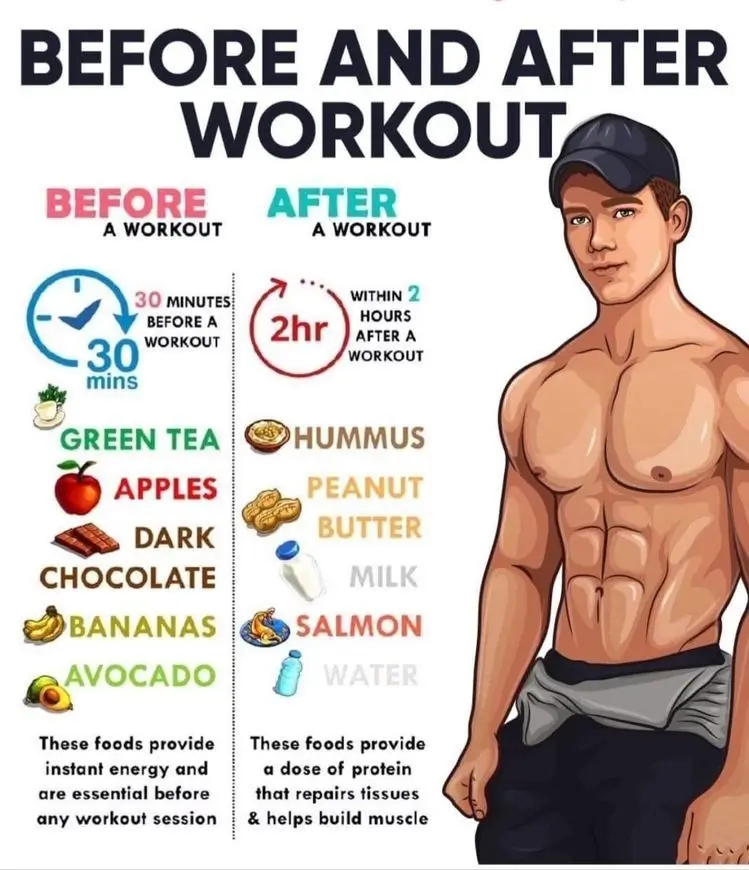
The main purpose of pre workout nutrition is to help provide usable energy without causing discomfort during the digestive process. Carbohydrates include oats, bananas, whole-grain bread, rice or fruit, and can be included in a meal or snack before exercising. Adding some protein can also help make the meal more filling. The selection of food must also depend on the time available prior to training.
If You Have 2–3 Hours Before Exercise
There is usually a good time in which to have a normal healthy meal (several hours). Examples include:
- Dinner: Chicken with rice and vegetables.
- Cooked Breakfast Whole-grain toast with eggs.
- Oats, berries and Greek yoghurt.
- Rice, lean meat and vegetables
These workout meals offer a balanced diet of carbohydrates and protein not depending on processed foods. Do not eat large amounts of foods that are high in fat or heavily fried right before working out if they cause discomfort.
If You Have 30–60 Minutes Before Exercise
If you’re pressed for time, opt for something smaller and more easily digested. You can try a banana, yoghurt, toast, a small amount of peanut butter or just a fruit smoothie. As you approach your workout, the more helpful it will be to have a simple meal or snack.
Carbohydrates and Pre Workout Nutrition
Carbohydrates are of special interest in the context of pre workout nutrition because they can provide readily available energy for exercise. Good options include:
- Fruits such as bananas, other fruits and juices.
- Oats.
- Rice.
- Potatoes.
- Whole-grain bread.
- Low-fat cereal.
Don’t go without carbohydrates to lose weight. Rather, take into account your total calorie consumption, and select portions that fit your activity level. For longer periods of exercise, it can be handy to have an adequate supply of carbohydrate to help meet the body’s energy needs.
Protein Before Exercise
Another important component , although the ideal amount and timing can vary. Foods containing moderate amounts of protein can be consumed before exercise, including eggs, yoghurt, milk, chicken or other lean protein foods. A protein shake doesn’t have to be taken before working out.
A typical meal with an adequate protein content can be just as effective. For people who already have a good amount of protein in their diet, the precise timing of a single meal isn’t as crucial as having a proper diet pattern over the day.
What to Eat After a Workout
Once your training is finished, you require nutrients to recover. This is where post workout nutrition becomes particularly useful. Protein, carbohydrates and vegetables, or fruit, can be a balanced post-workout meal. Protein provides the amino acids required for muscle repair and carbs can replenish energy stores.
Good workout meals after exercise include:
- Chicken, rice and veggies.
- Put eggs with potatoes and vegetables together.
- Egg + potato + veggies. Greek yoghurt, fruit and oats.
- Lentils on crackers with a low GI.
- Whole-grain bread with hummus and crackers.
- Use lean meat, rice and salad.
- A smoothie made using milk, fruit and oats.
The ideal one would be the one that will fit into your typical eating habits and be easy to follow.
How Much Protein Should You Eat After Training?
Protein is one of the key ingredients of post workout nutrition, especially when it comes to muscle building and/or weight maintenance. Instead of thinking of just one meal look at the total protein for the day. For those who exercise regularly, it may be a sensible idea to distribute protein throughout the course of the day.
You can get your daily intake from sources like eggs, dairy products, chicken, fish, lean meat, beans and lentils. There’s no need to have an unusually high amount of protein in a post-workout meal. It’s more about consistency throughout the day, than attempting to make up for it in one meal.
Do You Need to Eat Immediately After a Workout?
It’s a well-known fact that you need to eat right after working out. Actually, you eat throughout the day that is more significant than eating a meal in a very short period of time. If you consumed a well-balanced meal prior to activity, you might not need to have a big meal right after the workout.
If you do have a well-balanced meal or snack within several hours after training, however, will be convenient if you have trained without food for a couple of hours. So your what to eat before and after a workout schedule should be based on hunger and intensity of exercise.
Hydration Before and After a Workout
Food is just one component of workout preparation. It’s also important to drink adequate fluids, especially during extended periods of activity or when you’re hot. Begin an exercise session well hydrated and drink when thirsty and during exercise. Follow up with fluids after exercise to replace fluids lost. In a regular workout, water is usually a suitable option.
If the exercise is of longer duration or especially if it is a hot session, watch for fluid and electrolyte loss. Don’t drink sports drinks on a regular basis. They are useful to the extent that they last long enough, and are intense enough and sweat loss is not too great.
Foods to Limit Before Exercise
Although all good foods are nutritious, not all are best eaten right before training. Very high fat and high fibre foods can be harder to digest and might not be very comfortable for some. It is also very important to avoid large meals, high-fat foods (especially fried foods), and new foods just before exercising.
These foods are not blacklisted; you don’t have to avoid them all together. Instead, consider when you eat them. A useful approach to pre workout nutrition isto select foods you are familiar with in your body – especially if you must exercise before you eat.
Simple Pre and Post Workout Meal Plan
You can keep workout meals Simple without having to follow a complicated diet;
| Timing | Example meal |
| 2–3 hours before | Oats, milk, banana and yoghurt |
| 30–60 minutes before | Banana and yoghurt |
| After workout | Chicken, rice and vegetables |
| Evening workout option | Eggs, potatoes and vegetables |
| Quick recovery option | Milk, banana and oats smoothie |
These are only examples and not set standards. Servings should be based on your energy requirements, activity level and your overall diet plan.
Match Your Food to Your Workout
Depending on your activity, your nutritional requirements may vary. It’s possible that a short-term resistance training session is more dependent upon the immediate supply of fuel than a long distance walk or endurance training session.
Likewise, an individual who exercises more than a few times per week might require different amounts of energy than someone who participates in exercise less frequently. This is why what to eat before and after a workout should not be viewed as a one-size-fits-all solution. Consider three different aspects:
- Workout intensity: The harder the exercise, the more fuel will be needed.
- Workout duration: The longer the exercise, the greater the demands on energy.
- Personal goal: When it comes to calories and macronutrients for muscle building, weight maintenance, and overall fitness, it’s important to understand that there are distinct strategies.
Common Mistakes With Pre Workout Nutrition
After eating a very large meal is one of the common mistakes. The other is to eat less or too little when the body is weak or is craving more food. Some people even take high doses of supplements, without paying attention to their diet.
Instead, it’s better to create a basic habit that is repeatable. Use familiar foods, modify amounts based on training and listen to how your body feels while you train. The same also goes for post workout nutrition. An elaborate recovery food isn’t necessary whenever you exercise.
Build a Consistent Workout Nutrition Routine
The best nutrition plan is a plan that you can sustain. This can be easier if you prepare simple ingredients ahead of time. For instance, you can cook rice, chicken, boiled eggs, potatoes and chopped vegetables for a few days.
Having a supply of bananas, yoghurt and oats on hand also helps to make fast meals easier. You should train in a consistent manner as this is important because your fitness training will depend on your eating pattern, training and recovery, not just one meal.
Conclusion
Understanding what to eat before and after a workout is not fussy about food. In the run up to exercise, concentrate on foods that supply the necessary energy and are easy to digest. Ideally, post-training feed on protein along with carbs and other nutrient-dense foods to aid recovery.
Effective pre workout nutrition and post workout nutrition Should suit the time you have to train, food choices and fitness objectives. Most importantly, get the overall diet right, not looking for one perfect meal. Simple, balanced workout meals, appropriate fluid intake and regular training can offer a tangible base for exercise efficiency and recovery.