Grip Strength Trainer: Benefits, Exercises, and How to Build Stronger Hands Naturally
Grip strength trainer is a small yet mighty fitness item. It develops hand, finger, and forearm strength by performing exercises of resistance-based squeezing. The impact of grip strength on everyday life and performance is greatly underestimated by most individuals.
Consider all the things that your hands do daily. You pull and push, open jars, you carry bags. The inability to hold on results in all these activities being more difficult and exhausting than they should be.
Grip strength trainers have been in use by athletes and gym users over the decades. Rock climbers need tough fingers to support body weight. Strong grip is required by weightlifters in order to handle heavy deadlifts and pull-ups. But grip training is not only limited to athletes. Grip training is of great help to office workers, older individuals, and patients in rehabilitation. This guide covers everything you need to know. You will get to know the most suitable exercises, good form, and how to advance gradually without injuries.
1. What is a Grip Strength Trainer?
Learning about Grip Training Tools.
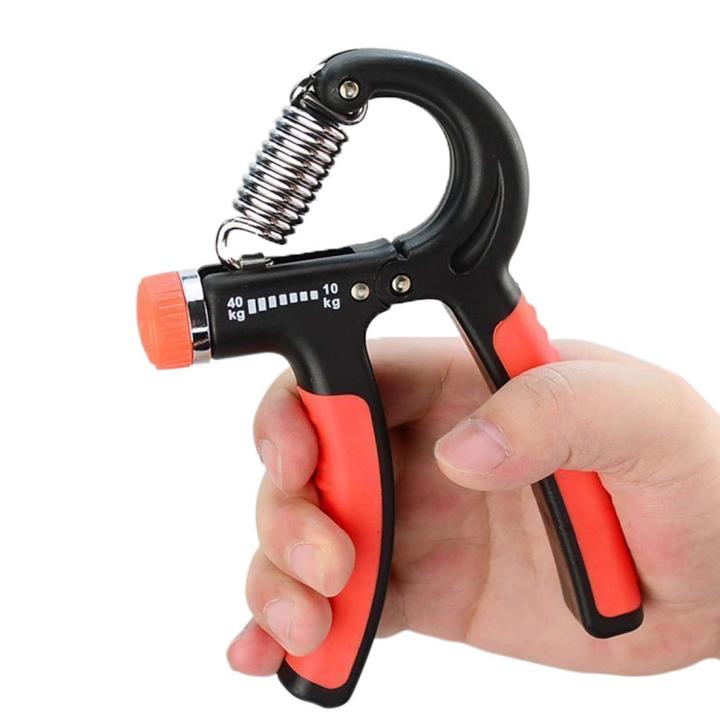
Any object that offers resistance to your hand muscles is considered a grip strength trainer. The most popular and well-known tools are spring-based grip trainers. You press two handles together with a spring mechanism several times.
Adjustable resistance models allow you to adjust difficulty by a simple dial. They are perfect in overloading in progression since a single tool encompasses a variety of resistance levels. Smaller, more specific hand muscles focus on training fingers and wrists.
Muscles Worked During Grip Training
The major movers in each squeeze and hold are your forearm muscles. With every repetition, the flexor digitorum and flexor carpi muscles contract with great strength. Both the tendon strength and fine motor control develop in your finger muscles. Also, your wrist stabilizers help keep you in the right position during all training sessions.
Who Should Use Grip Strength Trainers?
Regular grip training is beneficial to athletes in nearly all sports. Powerful grip endurance is needed by rock climbers, tennis players, martial artists and gymnasts. Grip strength trainers are used by weightlifters to avoid failure of grip when lifting heavy. Gentle and consistent grip training is also beneficial to office workers, seniors, and patients in rehabilitation.
2. Benefits of Using a Grip Strength Trainer
Improves Hand Strength
Grip strength trainer is a method that regularly results in strong squeezing strength of your hands. With the help of stronger hands, daily work is much easier and not so tiresome in the long run. Jar opening, heavy bag lifting, and tool holding all get much easier with practice.
Builds Forearm Muscles
With frequent grip training, visible muscle definition of the forearm is achieved after weeks. With regular resistance training, your forearm flexors become larger and more pronounced. As a result, your arms are more athletic and appear more developed in all the angles.
Supports Gym Performance
A grip strength gadget directly enhances performance on important exercises in the gym. Grips needed in deadlifts, pull-ups, rows, and farmer carries are also very taxing. Hence, by training your grip independently, it will not be your weakest point when lifting.
Enhances Sports Performance
The grip strength directly influences performance in a large variety of sports. Finger strength is needed by rock climbers to support little edges securely overhead. Stronger forearm grip is created by tennis players producing more racket control. Clinches, chokes, and grappling methods are always harder when Martial artists squeeze harder during the competition.
Helps Recovery and Rehabilitation.
Hand injury rehabilitation programs include grip strength trainers that are largely used across the globe. Light grip exercises are prescribed by the physical therapists to regain strength following fractures and surgery. Furthermore, moderate exercise training enhances blood flow and accelerates the healing of damaged hands.
3. Different Types of Grip Strength Trainers
Adjustable Grip Trainers
The most cost-effective and versatile type of grip trainers are adjustable. You simply turn a dial to increase or decrease resistance between sessions easily. Careful progression in beginners: Low resistance at the beginning and progressive levels with the growth of strength during weeks. So a single variable grip strength trainer is good throughout your strength training period.
Finger Exercisers
Finger exercisers are used to exercise the fingers separately with independent spring-loaded buttons. This isolates the weakness in particular fingers that cannot be corrected by regular grip trainers. This specific method of individual finger training is especially helpful to musicians, climbers, and surgeons. Moreover, they enhance the tendons and finger coordination at the same time in all sessions.
Stress Balls and Grip Rings.
The simplest grip training tools are grip rings and stress balls. They offer soft resistance that is appropriate to absolute beginners, elderly, and rehabilitation patients. Therefore they pose minimal risks of injury when utilized properly and regularly during the healing process.
Wrist Rollers
Wrist rollers build forearm strength by rolling repeatedly in resistance against gravity hanging. You pull a rope tied to a weight plate up the hill and down the hill. This gives a strong forearm workout and develops muscular endurance which cannot be imitated by the other grip tools.
4. Best Grip Strength Exercises
Basic Grip Squeezes
The most basic grip training program would be to do basic grip squeezes. Have your grip strength trainer, and squeeze it closed with maximum controlled effort. Slow release, repeat 15-20 times per hand each set. Do 3 sets per hand with 60 seconds in between sets.
Timed Holds
Holds that are done with a time limit develop endurance in the grip which is not effectively developed with basic squeezes. Fully squeeze your trainer and maintain the contraction between 20-30 seconds. Let go and take a break, and then repeat the hold. Thus, timed holds directly enhance the performance of climbing, endurance in deadlifts and grappling.
Finger Extension Exercises
The majority of the grip trainers just flex your fingers by squeezing. Nevertheless, you also need to exercise finger extensors in order to have balanced muscle development of the hand. Hook a rubber band around your fingers and push them apart against your will several times. Alternate between hands: do 20-25 repetitions with each grip training.
Farmer’s Carries
The carries developed by Farmer develop functional grip strength by means of real world carrying. Take two heavy dumbbells, and walk 20 to 30 meters with complete control. The grip is in constant action to keep the weight in place during the entire carry distance. Do 3 sets each session and progressively add more weight within the same week.
Dead Hangs
Dead hangs build grip strength and shoulder stability with a single exercise. Hang at a pull-up bar, with both hands, as long as it feels comfortable. Your grip muscles are constantly active in keeping you in position against full bodyweight. Begin with 20-30 second hangs and then gradually increase to 60 seconds over several weeks.
5. How to apply a Grip Strength Trainer in the Right way.
Selecting the appropriate Resistance.
The beginners must always start with the lightest resistance than they believe they require. During the progression of grip training, your tendons and ligaments lag behind in development as compared to the muscles. When starting out with a good resistance, you can do 15 repetitions with controlled form without any problems. When form collapses prior to 15 reps, you are currently overweighted.
Proper Training Frequency
Exercise your grip 3-4 times a week with no less than one day off between each. Between training sessions, you should allow your forearm muscles and tendons in your fingers to rest. Moreover, overtraining grip muscles results in tightness in the forearm, tendon soreness and decreased performance soon. There should be no more than 10-15 minutes of focused grip work in each session.
Grip Strength Progressive Overload.
All strength gains during grip training are progressive overload and thus constant with time. Gradually add 2-3 repetitions to a session and then proceed to more difficult resistance. When you are comfortable with 25 good-form repetitions, add resistance the next time. Note down your training sessions in a plain notebook or mobile phone application regularly.
Grip Training + Exercises.
Do grip exercise following the main gym and not the lifting exercises. Safe and effective deadlifts, pull-ups and rows require fresh grip strength. Accordingly, pre-fatiguing your grip prior to heavy lifting is a huge unnecessary increase in risk of injury. Efficiently use your grip strength trainer during rests between sets of other exercises.
6. Myths to Evade.
Training Too Frequently
Grip training on non-rest days will pose extreme overuse injuries. A tendon in your fingers and forearm muscles require rest to heal and become strong enough. Training, therefore, leads to chronic tightness of the forearm and tendon inflammation with time. Safe and steady progress is safe at no more than 3 to 4 sessions per week.
Using Excessive Resistance
Beginning with too heavy resistance forms are bad and cause instant strain on the wrist. Strong resistance causes the wrists to bend sideways in squeezy movements in an awkward position. Never compromise on clean and controlled form in favour of amazing resistance during any training session. Also, the slow growth process safeguards your tendons and yields more reliable long term strength gains.
Finger Extensor Training: Ignored.
The majority of the population only squeeze but never train their extensor finger in the reverse direction. This causes major muscle imbalance of your finger joints in the long run. Thus, there is pain and tendon issues in the joints of the fingers in the long run due to chronic flexor dominance. Regularly add rubber band finger extensions at the end of each grip training session.
Expecting Instant Results
Grip strength is slower in development than big muscle groups such as chest and legs. As a muscle tissue, your tendons tend to respond more slowly to new training stimuli. Thus, you can anticipate between 4-6 weeks before the significant increase of strength in your hands. Consistency is much more important than intensity in the course of grip training.
7. Grip Strength Improvement Time.
Early Strength Gains
Within 2-4 weeks, your nervous system becomes adapted to grip training. Your brain becomes more efficient in recruiting more muscle fibers with every squeeze. As a result, you will have increased endurance in squeezing and reduced fatigue in your hands in day-to-day life. More so, you will have a much more secure grip during gym exercises such as deadlifts at the beginning.
Visible Forearm Changes
The observable forearm muscle tone is usually seen in weeks 6-12 of regular training. With consistent resistance training, your forearm flexors become more pronounced in appearance. In addition, the muscle belly of your forearm will get bigger during contraction with time. The majority of regular trainees can observe evident development of their forearms in 3 months of regular training.
Long Term Benefits
Compounding benefits ensue in all spheres of physical performance as a result of long term grip training. As the grip ceases to be your limiting factor, your numbers in deadlift and pull-up are going to go up. Moreover, sports performance is enhanced because grip endurance enables high intensity effort to last during the competition. The stronger hands and forearms make life a lot more comfortable on a daily basis.
FAQs
Do grip strength trainers really work?
Yes. Regular practice of using a grip strength trainer develops quantifiable hand and forearm strength. Studies have proved that consistent grip training enhances crushing strength and grip endurance as time goes by.
Do grip trainers develop forearms?
Yes. Forearm flexor muscles are directly stimulated by grip training, which leads to observable muscle growth. Together with gradual overload and proper nutrition, grip trainers can bring about evident forearm size gains in a time span of 8 to 12 weeks.
How frequently to train grip strength?
Grip training 3-4 times a week with rest days between training. This frequency is progressive and it gives the tendons and muscles time to rest between sessions.
Are adjustable grip trainers better?
Yes, to the great majority, yes. Adjustable models enable gradual overloading without having to buy a variety of trainers independently. They provide the most cost effective long term value and adaptability to both novices and more experienced trainees.
Is grip training beneficial to deadlifts?
Absolutely. Grip failure will not cripple your deadlift as a stronger grip will allow you to achieve higher deadlift numbers. The difference between deadlift weight in many lifters is the extra weight put on through simply training to gain grip strength.
Can grip training be done everyday?
No. Restless days of grip training are associated with tendon overuse injuries and forearm fatigue. Train 3 or 4 days a week and have rest days to ensure safe and sustainable long term development.
What is the level of resistance beginners should use?
Novices must work with a resistance which permits 15 unstraining repetitions of the wrist. The typical novice will begin at 20-40 pounds of resistance and work their way up.
Conclusion
One of the most feasible and underestimated investments in terms of fitness today is a grip strength trainer. It develops hand strength, forearm muscle and grip endurance which applies to all aspects of life. Moreover, regular grip training enhances sports performance, gym outcomes, and everyday practical functionality in tandem.
The healthy development aids in injury prevention and offers consistent reliable outcomes in the long run. Begin with low intensity, exercise regularly (3-4 times per week) and add resistance slowly every week. In addition, it is important to do exercises that involve squeezing and to pair them with finger extensor exercises to maintain the healthiness of your joints in the long run.
Grip training, in conjunction with your general physical fitness program, is the best long-term progress that can be made. Your deadlifts improve. Your sports performance is enhanced. Each month, your life is made easier. Start exercising with a grip strength trainer and make your hands strong that your body deserves.