Hypertrophy vs Strength Training: Key Differences, Benefits, and Which Is Better for Your Goals?
Most fitness enthusiasts tend to be in a dilemma of deciding a certain line of work. The fundamental distinction between these techniques will get you the most out of the gym.
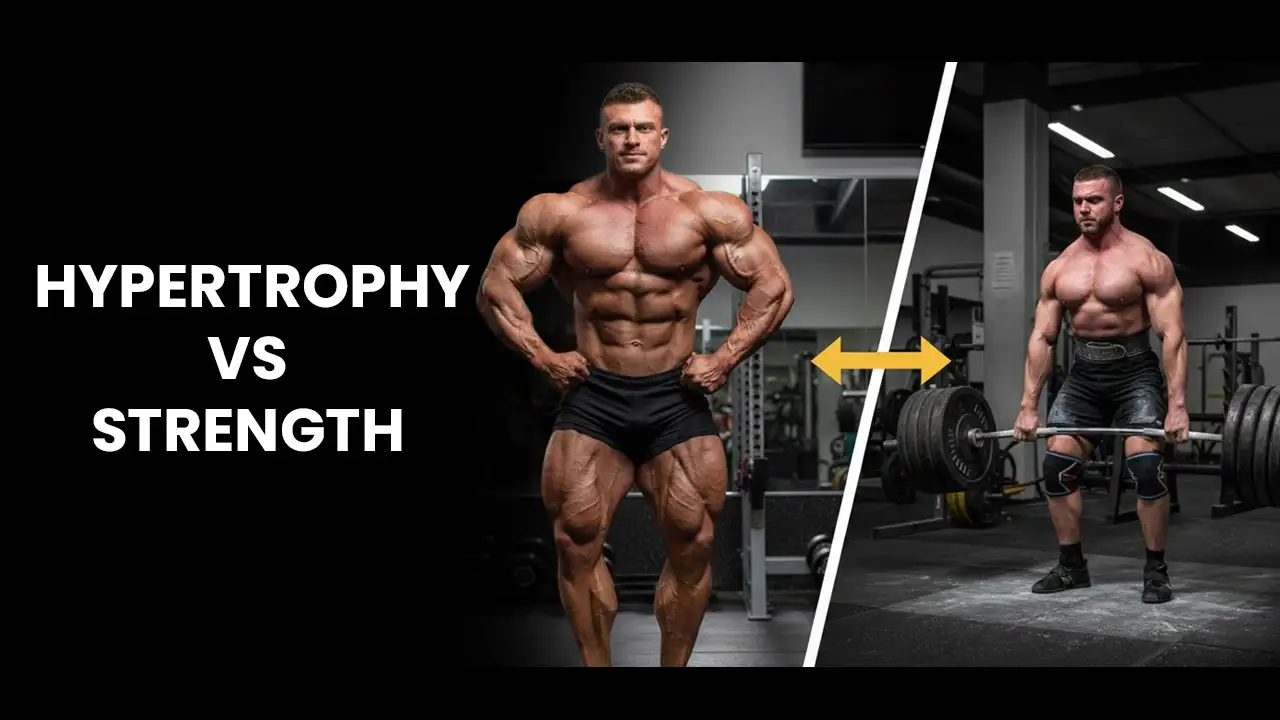
The scientific word of increasing your actual muscle size is muscle hypertrophy. This mode of training causes structural development of the individual skeletal muscle fibers in the long run. Strength training is simply about working on maximizing the total force that your muscles will generate. This lifting methodology makes your nervous system recruiting of existing muscle tissue more efficient.
Every current fitness program is informed by the ancient debate around hypertrophy vs strength training. Individuals always contrast both modes of lifting since they have very similar exercises. But there are entirely different results associated with the particular set and repetition constructions. Clearly defined goals will give you a consistent long-term improvement by choosing your training style. The course you take points towards your overall body structure and physical abilities.
1. What Is Hypertrophy Training?
Understanding Muscle Hypertrophy
Muscle hypertrophy is the process of enlarging the physical cross-sectional area of the fibers that you already have. This particular biological process increases the size of the cell in the muscle of interest. The main emphasis is put on the development of aesthetics and muscle volume. You are doing little more than making the body build the internal protein structures.
Main Goals of Hypertrophy Training
The main goal in this case is to build up substantial lean muscle mass. This methodological system broadens the scope of physical boundaries of specific muscle groups targeted. Defining muscles and general appearance is a significant element of training. This type of programming is used by lifters in order to develop a classic bodybuilding physique. The decision between hypertrophy and strength training lies completely on your individual physical goals.
Normal Training Style of Hypertrophy.
This kind of methodology is based on the use of moderate weights with increased repetitions. Each set will have an average of six to twelve repetitions. It is important to maintain a tougher workout volume so as to provide optimal mechanical tension to promote tissue growth. The overall rate of development is determined by the total number of weekly sets in each muscle group. The shorter the rest period, the more the target tissues are subjected to constant physical load. Breaks between half a minute to one minute are also the best way to maximize the cellular pump.
2. What Is Strength Training?
Understanding Strength Development
The key to building real physical strength lies in the sole increase in maximal force production. This is the means by which your body can resist considerably more loads of external resistance.
It is based on the nervous system adaptations that are very fast and efficient. Your brain becomes trained to release motor units, much more powerfully in a synchronized way. The distinction between hypertrophy and strength training makes you maximize your gym performance per week.
Main Goals of Strength Training
The main aim is to lift heavier absolute weights on core barbell movements. All the training variables are pushed toward the movement of the greatest pound weight that can be safely moved. Enhancing functional performance can improve your overall athletic performance without being in the weight room. This training develops a strong body that can tolerate extreme physical activities.
Normal Strength Training Style.
This type of lifting employs very heavy weights with a reduced number of repetitions. Lifters do one to five repetitions per working set. The longer your rest, the more your central nervous system will be able to fully recuperate. A three to five minutes rest will guarantee the highest output of power the next time. The structural design gives a lot of emphasis on multi-joint compound movements. These large lifts enable you to overload the skeleton as a whole.
3. The Main Differences between Strength Training and Hypertrophy.
Training Volume
The programming of hypertrophy requires considerably more weight of working sets per week. You need to build up local tissue fatigue to the extent of initiating cellular repair processes. Strength work emphasizes reduced total volume, but has much heavier working loads. The absolute intensity of the weight takes precedence over total reps completed. Finally, hypertrophy vs strength training shows two different ways to transform the body.
Repetition Ranges
The typical classic hypertrophy rep range is six to twelve controlled repetitions. In a few current training regimens, this pathway is prolonged to twenty consecutive repetitions.
The best strength training repetition is strictly determined as one to five repetitions. The lifting in this particular boundary brings about quick neurological adjustments without undue fatigue.
Rest Period Differences
The shorter periods of rest will ensure that blood is kept in the working muscle tissue. This oxygen delivery strategic restraint augments the local metabolic stress reaction. With longer recovery periods, full cellular replenishment of adenosine triphosphate stores will occur. Heavy sets should be preceded by ample time of rest of your nervous system.
Workout Intensity
Hypertrophy involves moderate intensity of work as compared to your absolute one repetition maximum. Lifters typically work with weights 60-80 percent of maximal.
Strength work is the type of exercise that requires the highest intensity to test the structural integrity and bone density. You will regularly lift more than eighty-five percent of your maximum weight. The exhaustion of the body as a result of high volume is severely localized and burning. Systemic exhaustion that is brought about by heavy strength lifting has far-reaching consequences on your nervous system.
Physical Results
Hypertrophy training provides cosmetic muscle size growth and body shape. Your muscles are much fuller because of more fluid and protein storage. The strength programs result in dramatic force output improvements without an enormous gain in weight. You build up such thick muscle fibers that they can cause tremendous physical strength.
4. Exercises best for building strength and hypertrophy.
Compound Exercises
The ultimate base of lower body mass building is the use of barbell squats. This motion overworks the quadriceps, glutes and core muscles all under load. Traditional deadlifts need the effort of the whole body to lift the heavy weight off the floor. This body-part workout develops the whole back chain and makes your back thicker. The flat bench press is the conventional equipment of building upper body power. This motion plots the pectoral muscles, anterior deltoids and triceps in perfect coordination. The overhead press will require complete shoulder strength and trunk stability to achieve. Exercising a heavy barbell directly upwards produces cap-like thickness in your delts.
Isolation Exercises to Build Up.
Strict bicep curls involve only the anterior arm muscles by removing the momentum altogether. The tension is concentrated on the elbow flexors and as much localized metabolic stress as possible is achieved. Leg extensions do not strain the lower back tissue, and isolate the quadriceps. This machine workout enables you to take the muscles to failure in a safe manner.
The lateral deltoid head is targeted by dumbbell lateral raises to develop width of the upper body. The arms should be kept straight so that there is always a mechanical tension on the shoulder.
Strength Movements = Functional Movements.
The heavy farmer develops an extraordinary grip and core stability of the entire body. When walking with the heavy load, all the structural joints must stabilize against the gravitational force. Weighted pull-ups build up huge relative upper body strength and width of the back safely. Pulling the external weight in addition to your back develops functional control.
Barbell rows challenge your position in the back as they build a thick upper back. This pulling action helps directly in your deadlift performance in the long run.
5. Benefits of Hypertrophy Training
Improved Muscle Size and Shape
Regular hypertrophy exercises will directly lead to improved overall physique development. The body composition changes as the fat deposits on your body are replaced by lean tissue.
Specific volume work develops a greater definition in the muscles of each part of the body. This particular aesthetic change is one of the most important objectives of casual gym goers.
Increased Metabolism
The development of lean muscle mass in dense form burns in more calories at full rest. To support its structure, skeletal muscle needs a lot of metabolic energy each day. This high energy consumption results in irreversible body composition changes in the long run. You are able to eat more calories a day and not easily increase fat mass.
Better Muscle Endurance
The high repetition training will increase your ability to deal with the high local muscular endurance. The elimination of the burning product of metabolism becomes very effective in your body. This organizational change facilitates longer and more effective further training directly. You have a tough heart which is not tired of difficult exercises. The hypertrophy vs strength training will depend upon your recovery habits every day.
6. Benefits of Strength Training
Increased Maximal Strength
The idea of building a maximum strength will enable you to move heavy things without any risk. You learn to stabilize major joints and hold the spine straight when in stress. This physical competence comes directly into improved daily functional lifestyle performance. The heavy groceries or the furniture would be easily carried out. Evaluating hypertrophy vs strength training helps beginners choose the correct weightlifting intensity.
Improved Athletic Ability
Dwelling on the power training that is based on strength gives explosive physical athletic performance. Building a lot of force quickly enhances your overall sprinting speed and jump height. These dynamic physical attributes are directly translated into immensely better on-field sports performance. During physical competition, you become a very powerful and shock-absorbing athlete.
Healthier Bones and Joints.
Regular resistance exercises offer mechanical loading that is necessary to maintain bone density. When heavy loads are applied on your skeletal system more bone minerals are deposited. The heavy weight training exercises stimulate connective tissues to provide very good overall joint stability. The reinforcement of the tendons surrounding the area will save the weak parts such as knees and shoulders.
7. Is It Possible to Mix Hypertrophy + Strength Training?
Advantages of a Hybrid.
It is true that you can combine hypertrophy and strength training in the same program. Combining these approaches can enable you to gain size and serious power. Such a duality guarantees a high level of balance of the fitness development of all physiological systems. Your avoidance is the particular plateaus of remaining in one style forever.
Powerbuilding Style Training
The trendy powerbuilding exercise program is a brilliant combination of the two different lifting philosophies. You start with heavy and compound lifts and end with high volume movements. This is a hybrid strategy that fulfills the need of aesthetic development and hitting hard. It is the final training regimen to the complete modern natural lifter.
FAQs
Is hypertrophy training good for beginners?
Yes, it develops great mind-muscle coordination and conditions joints to heavier loads to come.
Is it true that strength training can increase muscle size?
Yes, heavy weight lifts produce a lot of mechanical tension that stimulates muscle growth.
Which uses more calories?
Exercises involving hypertrophy typically consume a little more calories since they have an increased amount of training volume.
Is it possible to train both to get stronger and to hypertrophy?
Yes, high-volume isolation exercises can be effectively incorporated into the powerbuilding programs that incorporate heavy compound lifts.
Which rep range is the most effective in building muscle?
The conventional six to twelve rep regime has the most optimal growth balance.
Is more emphasis on strength training necessary in athletes?
Yes, on-field athletic performance can be directly enhanced by maximization of force production and optimization of neurological performance.
Conclusion
The two training types of hypertrophy and strength training have entirely different main physiological training objectives. One maximizes physical size and symmetry, and the other the absolute force production. The two techniques offer paramount physical advantages that enhance well-being and health in the long run. The decision between the two is just up to your personal vision and fitness objectives.
Hypertrophy vs strength training is a common combination among many lifters in an effort to develop balanced athletic bodies.
It is usually the best combination of the two lifting styles to produce the most balanced long-term physical outcomes. This is a moderate method that yields an appearance that is impressive and highly effective. Finally, your uniformity, recovery measures and nutrition on a daily basis will define general physical advancements.