Best Park Exercises for a Full-Body Workout
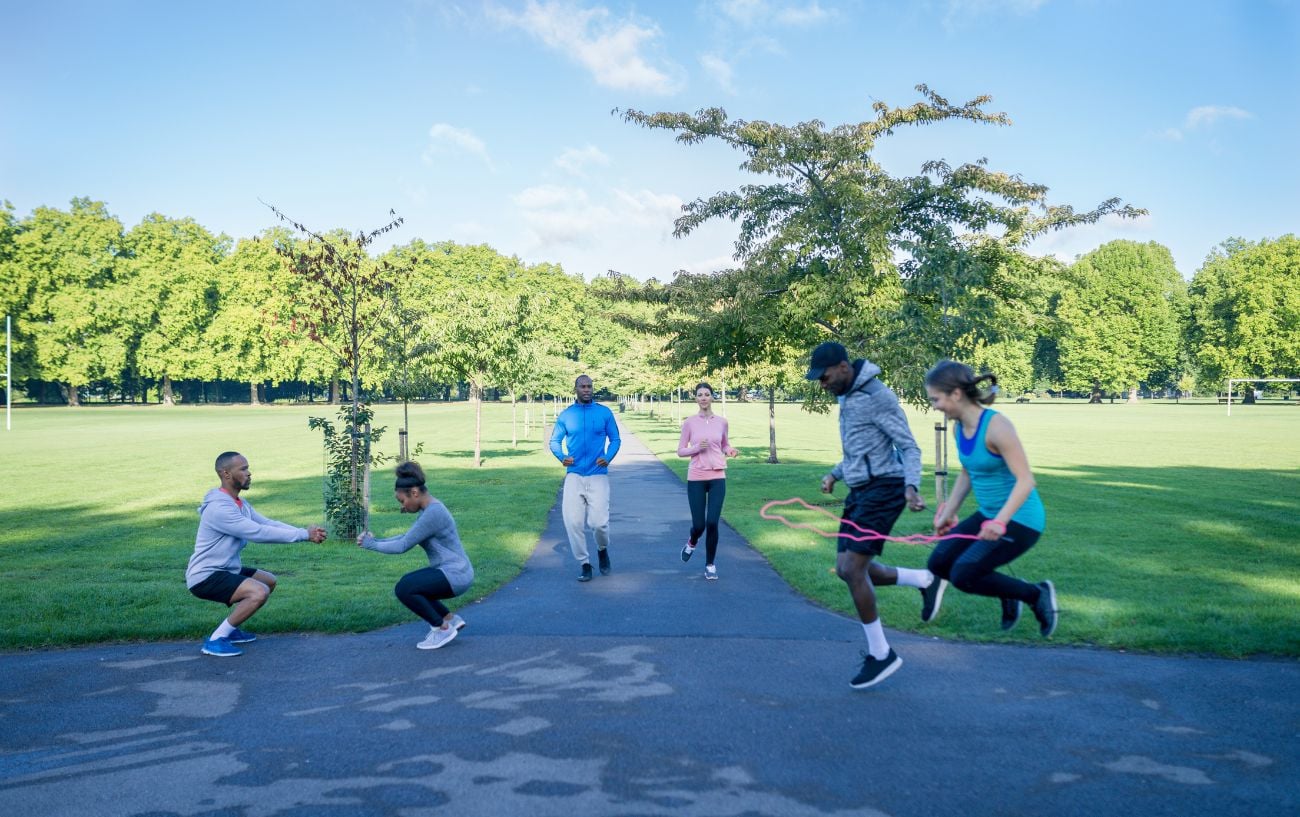
You don’t have to go to the gym to get a great full-body workout. One local park offers enough room, benches, pathways, steps and open space for a functional exercise program! Exercises in the park can be strength, cardiovascular, balance and mobility, and can be done with little to no equipment. That’s why a park workout is especially helpful for those who want to be active outdoors without having to deal with a complicated workout routine.
You may be new to exercising or you’re already active, but the important thing is to pick activities that develop different muscle groups and challenge yourself as you get going. This guide will explain you the best park workout exercises, how to set up an outdoor full body workout and how to keep your workout safe and efficient.
Why Choose Park Workout Exercises?
A great benefit of park exercising workouts is that they use an area that you may already have around you. A suitable park can provide:
- Free walking area and cardio class room
- Incline benches and step-ups (stepper machines).
- Brisk walk/jog paths (for walking and jogging at a speed of 3.2 to 4.8 kmph).
- Additional cardiovascular challenge with hills
- The floored areas for the exercises will be made up of grass.
- Allow sufficient room for stretching and moving around.
You can also enjoy a workout in the park as you are not always doing the same types of exercises in the same place. You do not have to employ all the facilities of the park. Just a few movements can make for an effective session.
How to Structure an Outdoor Full Body Workout
An outdoor full-body workout is one that engages the major muscle groups, not just one area. A simple structure is:
- Warm-up – 5 minutes
- Lower-body exercises – 10 minutes
- Upper-body exercises – 10 minutes
- Core exercises – 5 minutes
- Cardio – 5–10 minutes
- Cool-down – 3–5 minutes
A beginner would need just a 25–35-minute session. The exercises may be done in isolation or as a circuit. In a park, it may be especially easy to set up circuit training since not much equipment is required to transition from one exercise station to another.
Best Lower-Body Park Workout Exercises
The legs should also be an integral part of a park full-body circuit.
Bodyweight Squats
A squat is one of the easiest park exercises to perform and is a great workout with no equipment. Place your feet about shoulder width apart. Back hips, bend knees and lower under control. Push feet back to standing position. Begin with 2-3 sets of 10-15 repetitions. If regular squats are easier, either decrease the rate at which you lower or add more reps.
Walking Lunges
Walking lunges enable you to combine strength and movement. Make a slow step forward and bend down until the knees are just right. Extend front leg and step back leg forward. Follow a suitable flat area of the park. Initially begin by doing 8-10 lunges on each side. If you have limited balance, do stationary reverse lunges.
Step-Ups
A stable park step or suitable low platform can be used for step-ups. Step up onto platform with one foot first and step through with that leg. Go back down to the ground and switch sides. Do 8 – 12 reps on each side. Use a stable, dry, and suitable surface for exercise.
Upper-Body Park Workout Exercises
Another great way to exercise the upper body without having to use weights is to exercise at the park.
Incline Push-Ups
Incline pushups can be performed with a stable park bench. Rest hands on bench, straighten legs behind you. Bend your torso down towards the bench, keeping your body still, and push back up. Incline pushups are typically easier to execute than pushups on the floor, making them a good option for novices. Perform 2-3 sets of 8-12 reps.
Bench Triceps Dips
The triceps are the muscles on the back of the upper arms and can be trained using the triceps dip. Situate yourself close to the edge of a stable bench, put your hands next to your hips and slowly shift your body forward.
Lower down a little with your elbows bent and press back up through hands. Maintain a controlled movement and ensure there is not too much depth. If shoulder pain occurs, then do the incline push-ups.
Pike Push-Ups
Pike push-ups provide more emphasis on the shoulders. With hips up and body in an inverted V position. Bend your elbows and lower your head towards the ground before pushing back up. This exercise is more difficult to do than an incline push-up, so they should build up upper-body strength first.
Core Park Workout Exercises
Good core function aids in maintaining the body stable during squat, lunge, push-up and other movements.
Forearm Plank
Forearm plank is a good body weight core workout. Elbows should be under shoulders and body should be fairly straight. Begin at 20-30 seconds and build up to longer periods.
Plank Shoulder Taps
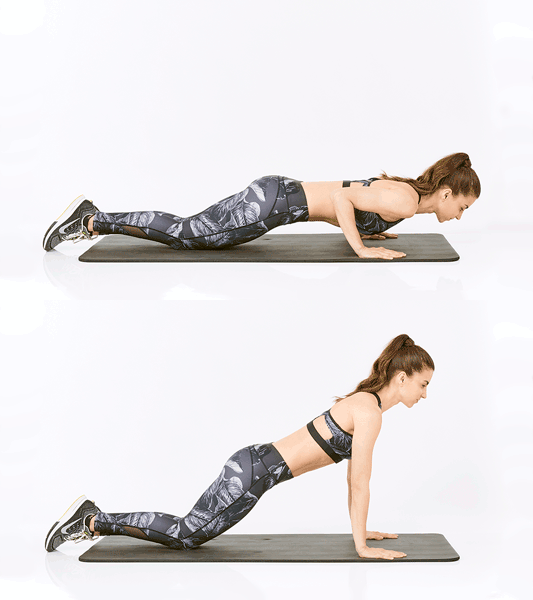
Start with hands on the floor and knees on the floor in a high plank. Raise one hand and lightly tap the other shoulder, then lower hand again. Change sides, maintaining as stable a base as possible. Tap 8 – 12 taps on each side.
Mountain Climbers
Core Training is used along with cardio for Mountain Climber. Move one knee to chest and switch legs starting in a high plank position. When starting out, beginners should concentrate on controlled reps, rather than speed. Start with a total of 20-30 reps.
Walking and Cardio in an Outdoor Full Body Workout
It is not essential for an outdoor full body workout to be all strength training. Hill work or walking and jogging can provide cardiovascular training.
Brisk Walking
Brisk walking is an excellent form of exercise for nearly anyone. Walk at a speed where there is clearly an increase in breathing but still conscious breathing. Consider 10 – 20 minutes after strength training or focus on walking as your primary exercise on recovery days.
Jogging Intervals
If already reasonably fit, take turns walking and jogging. For example:
3 minutes brisk walking → 1 minute jogging
Do this cycle for 15-20 minutes. As fitness levels improve, jogging time can be increased over a period of time.
Hill Walking
You don’t need extra equipment to make a walk more difficult, if you want to walk on a gentle hill. Walk uphill at a comfortable speed and recuperate on level ground. Do not start excessively steep hills.
A 30-Minute Park Workout
Can do the exercises above as one full body circuit:
| Exercise | Repetitions/Time |
|---|---|
| Brisk walking | 5 minutes |
| Bodyweight squats | 12 reps |
| Walking lunges | 8 each leg |
| Incline push-ups | 10 reps |
| Step-ups | 10 each leg |
| Plank | 25 seconds |
| Mountain climbers | 20 reps |
| Brisk walking | 5 minutes |
Do the strength movements for 2 sets. If necessary, take a rest break for 30-60 seconds between movements. Heads-up display for beginners – go around one lap first and then work up to two or three.
How to Make Your Park Workout More Challenging
As you get fitter, your program should slowly increase its challenge. There are a number of different ways to work up to a park workout.
Increase Repetitions
When comfortable, increase the reps of an exercise from 10 to 12 or 15.
Add Another Round
If you’re already doing two laps, slowly increase it to three laps.
Increase Walking Speed
Increase speed of cardio periods without losing control.
Use Hills
It can be increased the cardiovascular demand by adding gentle inclines.
Reduce Rest Periods
As fitness increases progressively shorten the rest periods between sets.
Use More Difficult Variations
Such as moving onto the incline to regular bench press. Take things slow, don’t attempt to make every session so hard to do.
How Often Should You Do Park Workout Exercises?
Two or three park workout sessions a week is a good starting point for beginners. For example:
- Monday – Full-body Park workout
- Tuesday – Easy walking
- Wednesday – Rest
- Thursday – Full-body Park workout
- Friday – Light activity
- Saturday – Walking or hiking
- Sunday – Rest
Coaches with more experience can tweak the frequency based on their training objectives and recovery. You don’t have to do intense park workout activities every day. Consistency can be achieved by rest or lighter activity.
Safety Tips for an Outdoor Full Body Workout
When training outdoors, it is important to be aware of your surroundings.
Check the Equipment
Check parks for stability and appropriateness of any bench, step, bar, etc., before exercising on.
Consider the Surface
Grass, slippery surfaces, loose gravel or uneven surfaces can make you lose your balance.
Wear Suitable Footwear
Select shoes suitable for walking, running or training.
Consider Weather Conditions
Highly hot, cold, wet or stormy days can impact the safety of outdoor exercise. Adjust session or go indoor if conditions are not appropriate.
Stay Hydrated
Take water, especially on hot days or during extended activities.
Do Not Ignore Pain
Normal exercise effort is not sharp or unusual pain. If it doesn’t feel right, don’t do it and if there is a need for medical advice, get some.
Common Mistakes During a Park Workout
Any outdoor activity can be less effective if done without planning.
Doing Too Many Exercises
Don’t need 15 movements. Few selected exercises will train the whole body.
Using Unstable Equipment
Avoid using inappropriate park equipment when it is available. There should be more stability before there should be more variety in exercises.
Skipping the Warm-Up
Begin with a few minutes of walking and light activity, followed by tougher exercises.
Ignoring Technique
The basic rules of correct exercise still apply while working out outdoors. Do each rep with control and not just speed.
Progressing Too Quickly
Gradually build up the workload. Your body is in need of adaptation time.
Can Exercises in the Park Help With Weight Loss?
Yes, park workouts can help maintain a healthy lifestyle and a proper weight. Walking, jogging, circuit training and bodyweight exercises all have the potential to raise your levels of activity and energy expenditure.
But exercise is just one component of any weight management program. Results are also affected by nutrition, daily activity, sleep and energy balance. The use of regular outdoor full body workout sessions and use of daily activities like walking can help develop a more sustainable approach than the occasional high intensity session.
Final Thoughts on Park Workout Exercises
A park can be an effective space for full body training, and it can be accessible! The best park workout exercises do not need to be complicated. Major muscle groups can be trained through squats, lunges, step ups, incline push ups, planks, mountain climbers, walking and jogging.
Begin with a simple full body outdoor workout, concentrate on form, and build up repetitions, rounds, speed or exercise difficulty. Most critically of all, select an appropriate level of fitness to choose exercises and ensure the park environment is used safely. Regularly exercising in the park can be a great way to get fit, with consistency.